
 Chamberlain openers
 Raised-panel steel
 Carriage house
 Modern flush
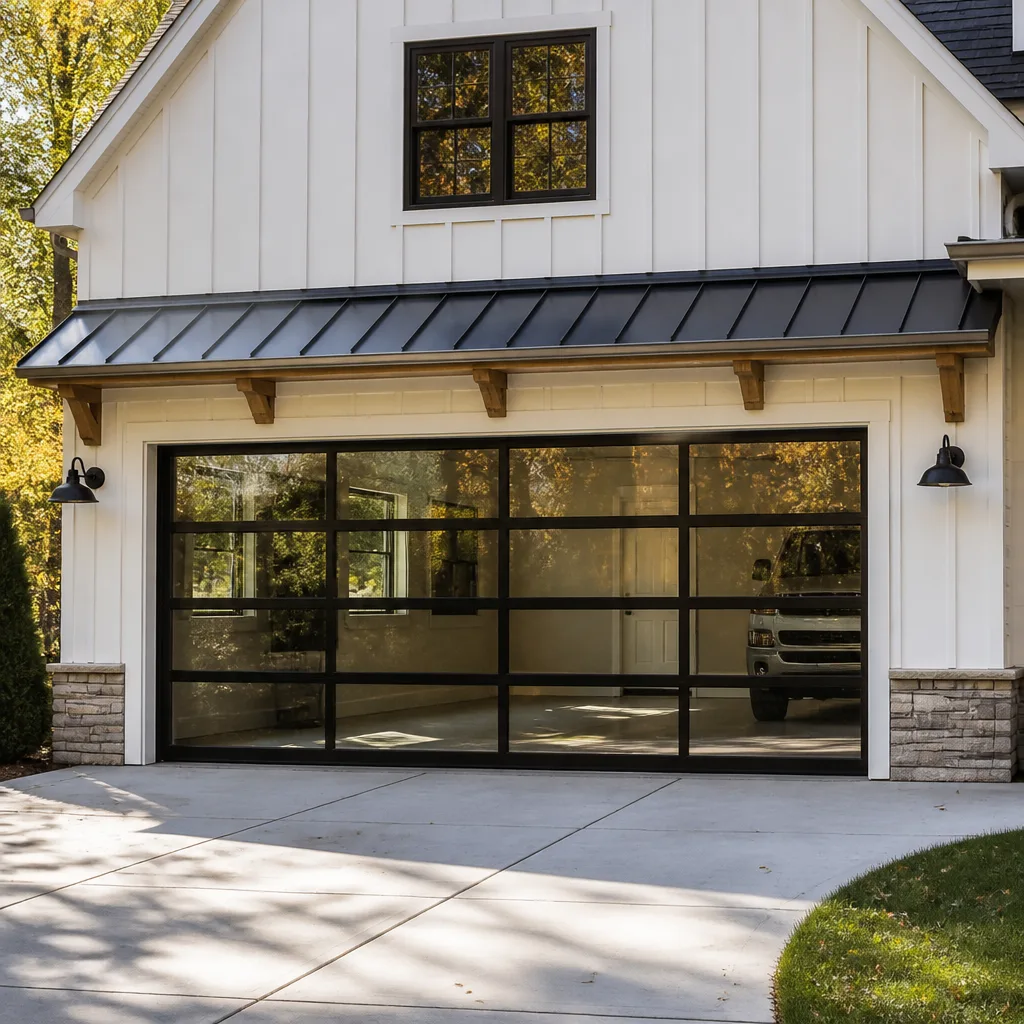 Full-view glass
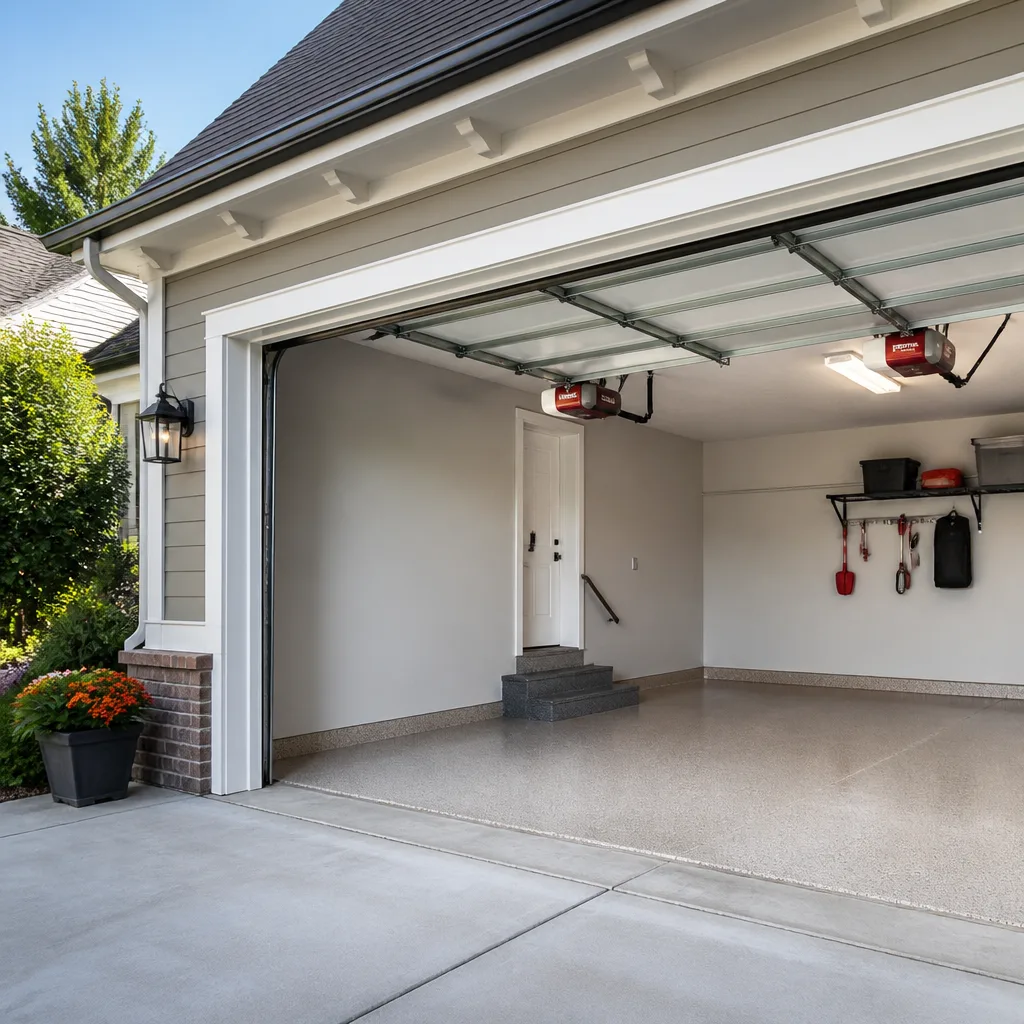 LiftMaster openers
Full 25-point door and opener safety check with every visit - springs, cables, rollers, tracks, and your LiftMaster or Chamberlain opener included
You get a price before we start. It does not change when the truck arrives.
Get your free estimateChamberlain Roller Replacement: The Queens Owner’s Guide
Chamberlain roller replacement in Queens typically runs $110 – $220 installed, and we stock the compatible sizes on our trucks so most jobs wrap up the same day you call. You’ll usually notice the problem before you see it: the door starts grinding, chattering, or hesitating on one side while the other moves smoothly. A worn roller doesn’t just make noise – it drags the door out of alignment and puts extra strain on the opener motor and the track brackets.
Most Chamberlain doors use standard hinged-panel rollers, either 2-inch steel or nylon bearings, depending on when the door was made and what series you have. The good news is that roller replacement is one of the least invasive fixes on a garage door, and unlike a snapped torsion spring, you don’t have to live with the warning signs for weeks. The bad news, if we’re being honest, is that Queens humidity and the salt air closer to the coast accelerates wear on the cheap factory rollers that come pre-installed on many Chamberlain doors. Aaron Teague and our crew see this constantly: a door that worked fine for seven or eight years suddenly sounds like a shopping cart with a broken wheel, and it’s almost always the rollers, not the opener.
Which Chamberlain Models This Applies To
Chamberlain doesn’t manufacture its own doors – they make the openers, which means the rollers on a “Chamberlain door” come from the door panel manufacturer (often Clopay, Amarr, or Wayne Dalton) paired with that Chamberlain opener. This is a compatibility gotcha worth knowing: the roller diameter, stem length, and bearing type are determined by the door, not the opener. If someone tells you a roller is “Chamberlain-specific,” they’re conflating the two systems.
What we check on the truck before quoting: the roller’s wheel diameter (2 inches on most residential Queens doors, though some older heavier wood doors in places like Jackson Heights or Forest Hills use 3-inch), the stem length (7/16-inch or 1/2-inch is standard), and whether you currently have steel or nylon bearings. We stock both, plus the 11-ball and 13-ball bearing counts that improve on the original 8-ball or 10-ball factory rollers. If you have a Chamberlain opener paired with a Clopay door, you can read the manufacturer label on the inside edge of the top panel – the model number there is what we cross-reference, not the opener model. For quality aftermarket equivalents, we lean toward nylon-bearing rollers over the factory steel ones because they’re quieter and last longer in New York’s freeze-thaw winters.
Styles & brands we work with
Signs Your Chamberlain Roller Replacement Is Failing
- Grinding or squealing when the door moves. The bearing inside the roller dries out, then the steel ball bearings start wearing against themselves. Once it grinds, the bearing is shot and the roller needs replacing.
- Door shudders or shakes visibly on one side. A flat-spotted roller (usually from sitting in one position through a cold Queens winter) creates a bump every time the wheel rotates past the wear point. The whole door jolts with each pass.
- Door hangs at a slight angle in the opening. When a roller’s stem is worn or bent, the panel sits lower on that side, and the gap between the door edge and the track changes. This is the early misalignment that ultimately throws the cables off.
- Metal shavings or grey dust near the track brackets. The roller bearing sheds material as it fails. If you’re wiping a gritty powder off the horizontal tracks, that’s bearing material, not household dust.
- Opener works harder than it used to. If your Chamberlain opener’s chain or belt starts rattling more, and the motor sounds labored, binding rollers are almost always part of the problem. The opener is trying to drag a door on bad wheels.
See the difference
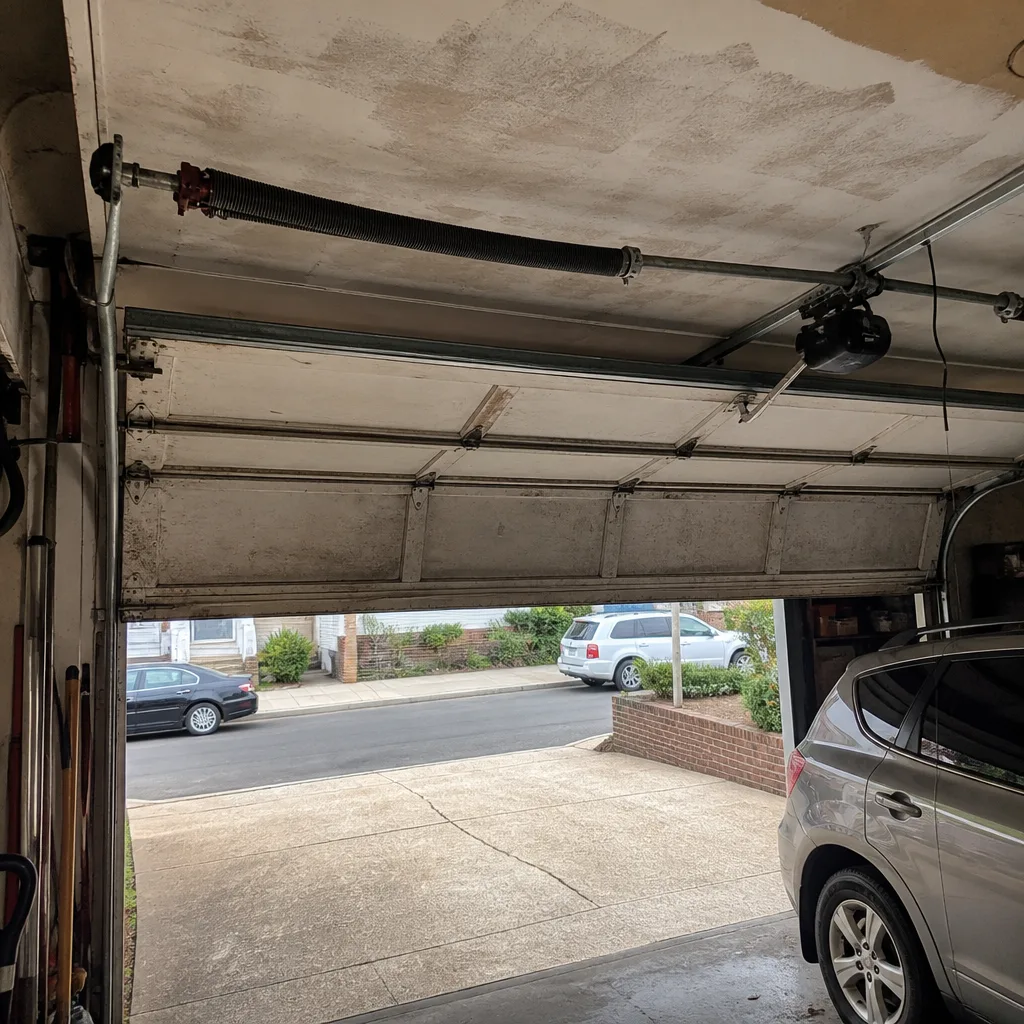 Before
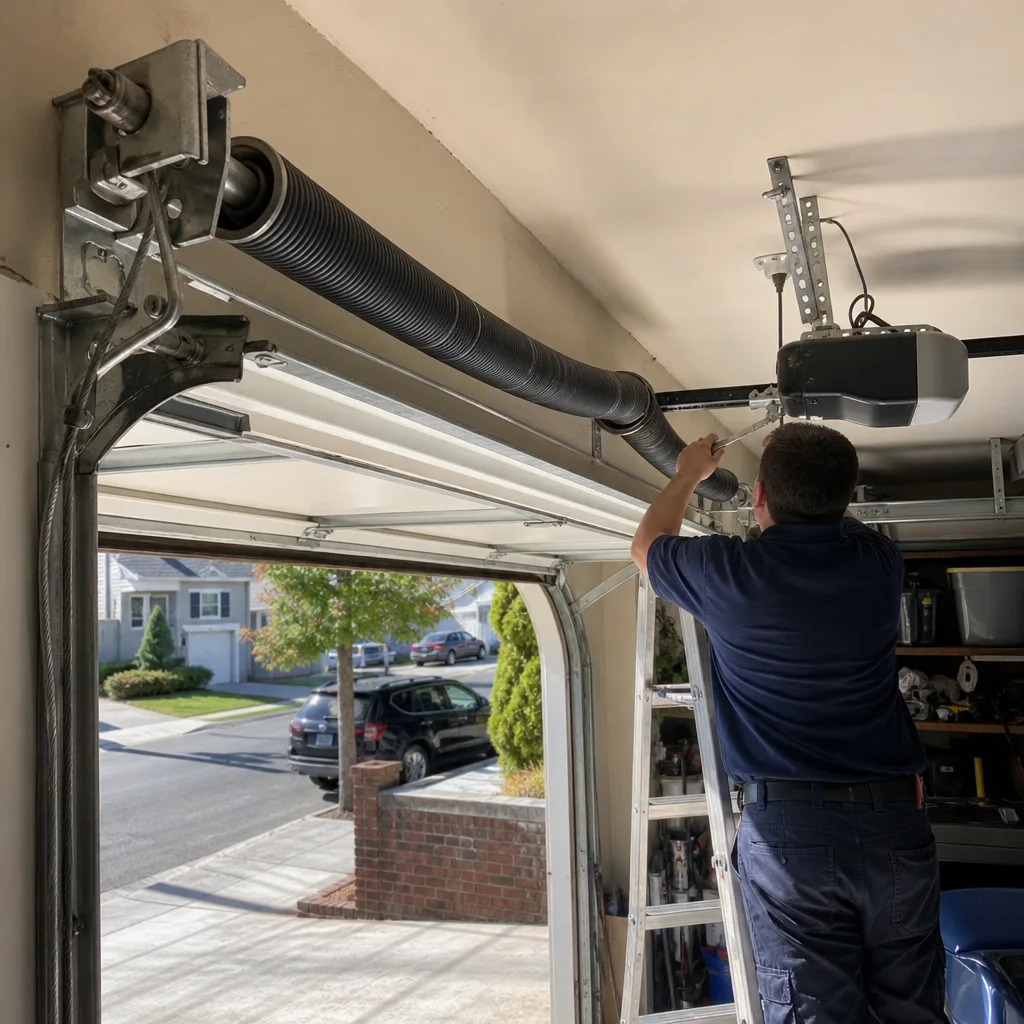 After
After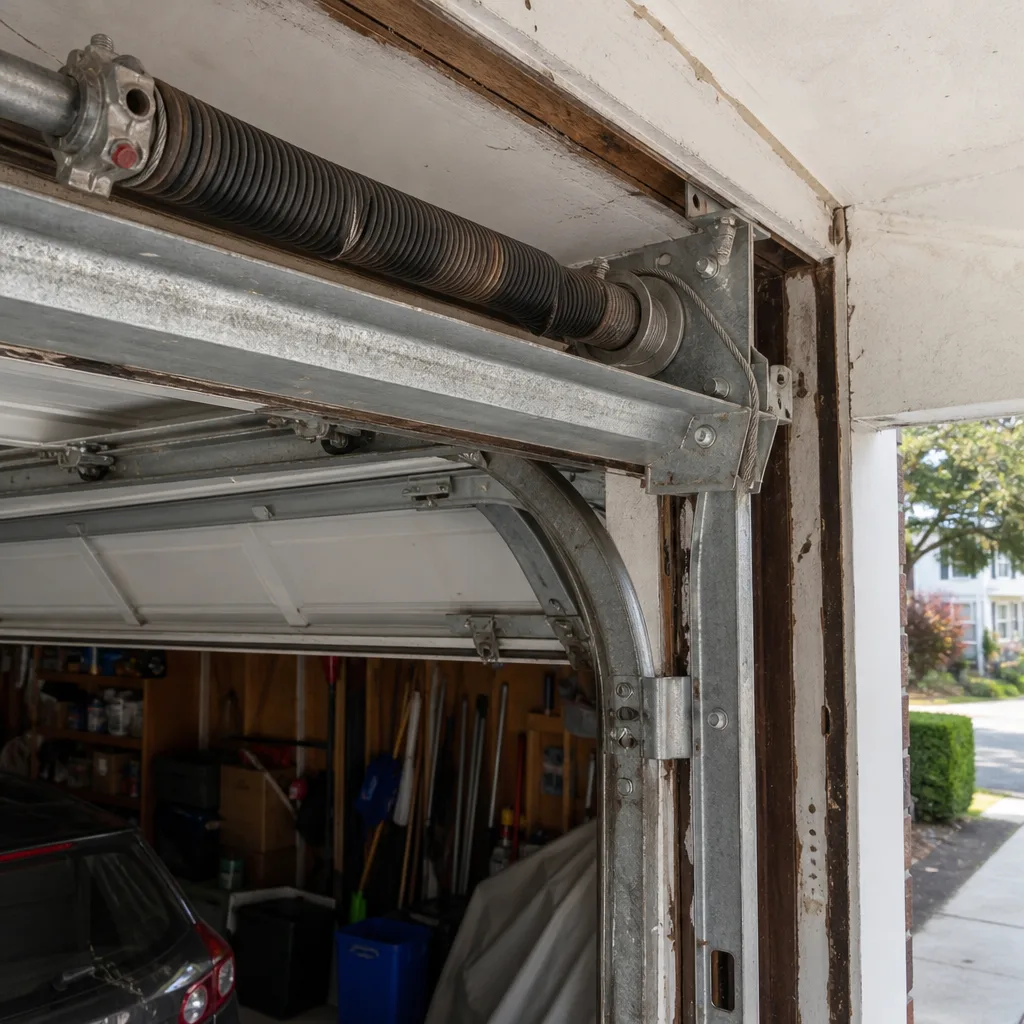 Before
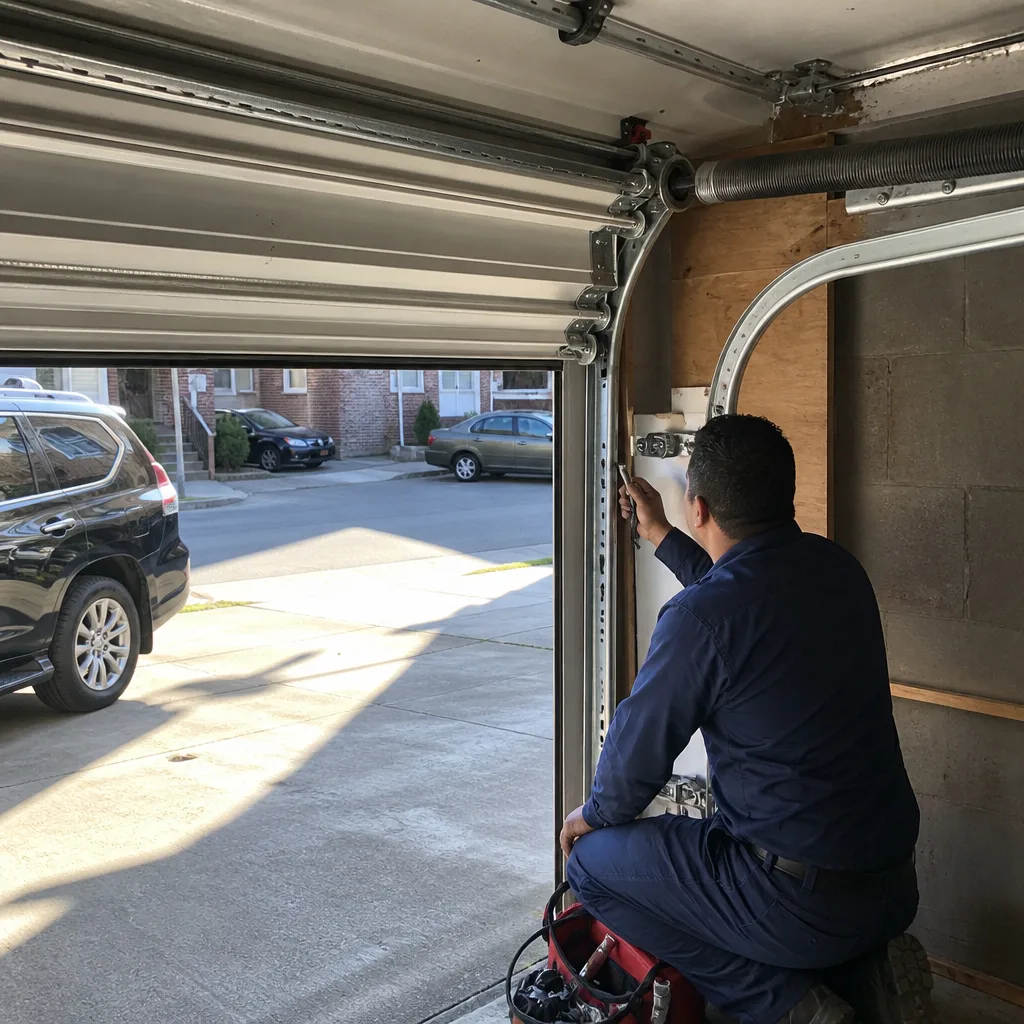 After
After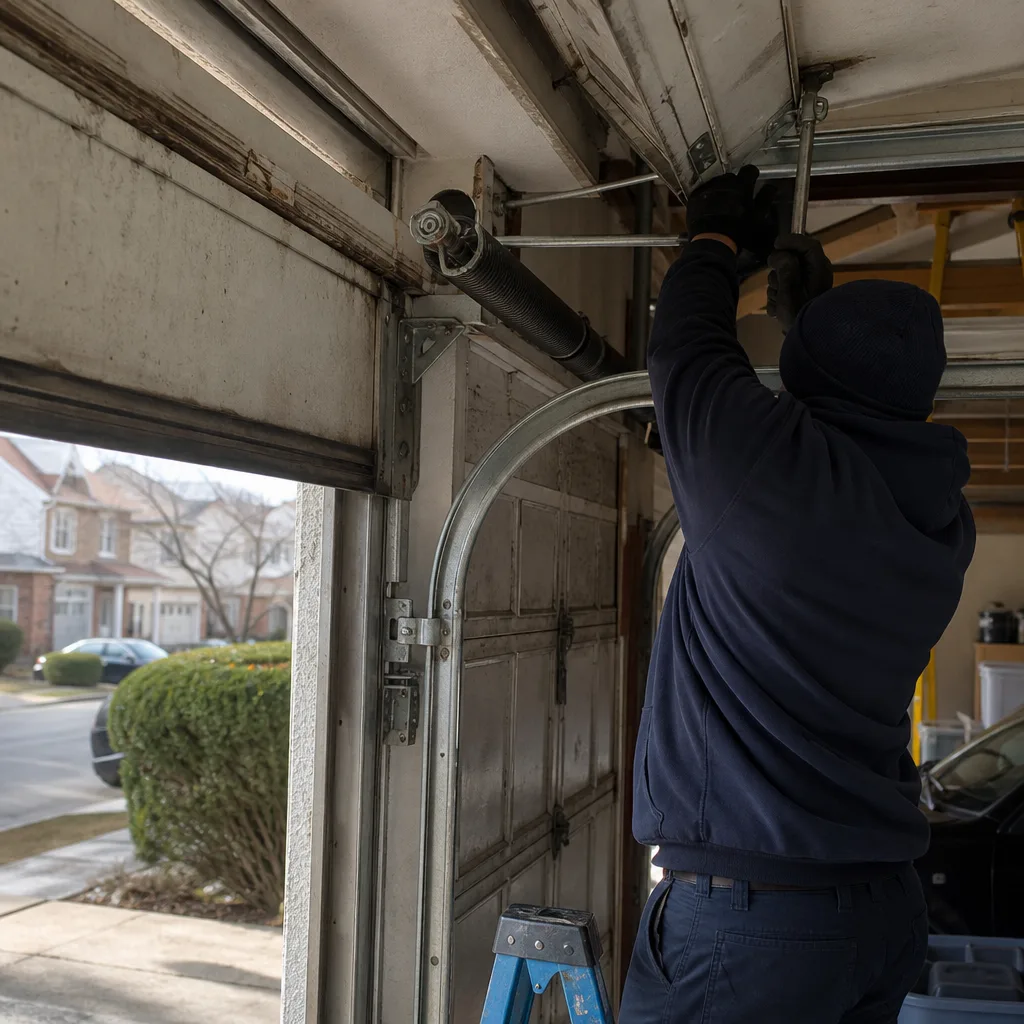 Before
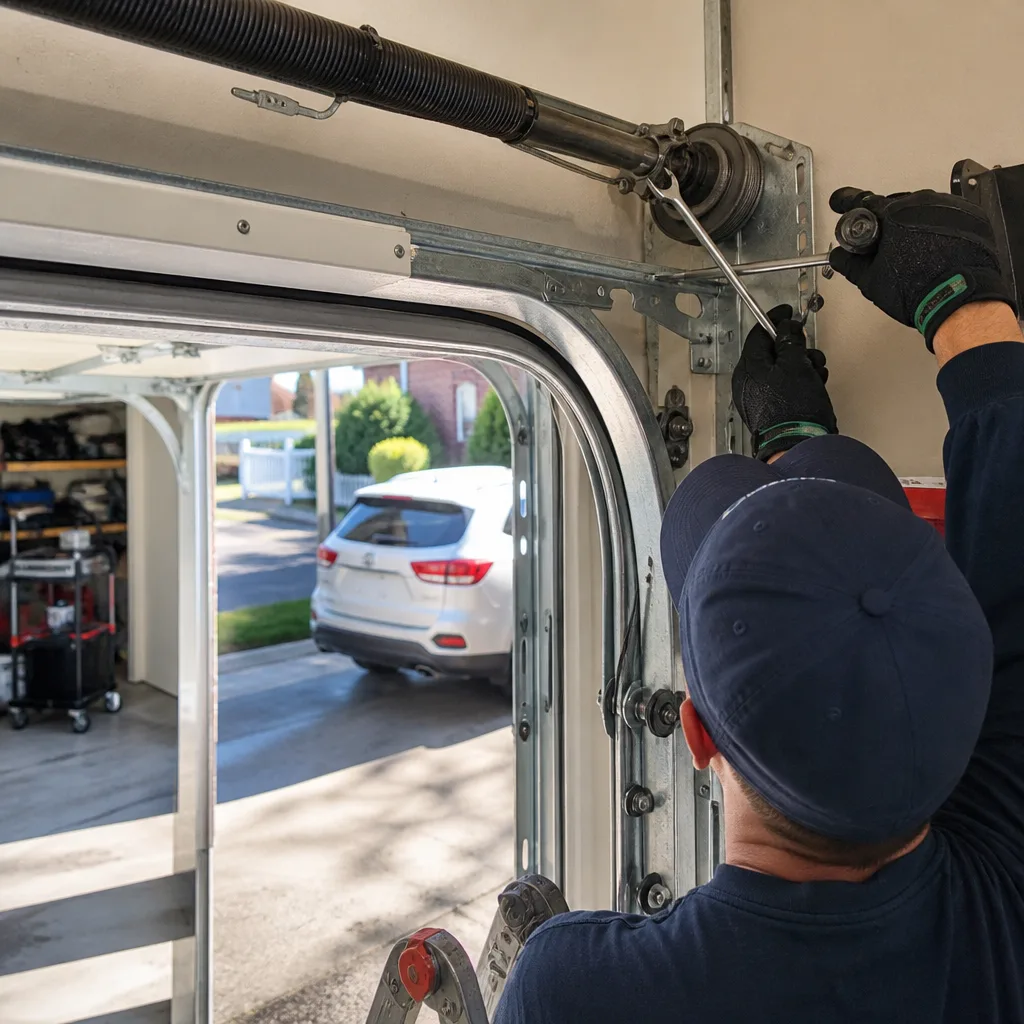 After
AfterReplacement Cost & What’s Included
For a Chamberlain-paired garage door in Queens, roller replacement runs $110 – $220 for a full set of rollers on a standard 7- to 9-foot single door. The range reflects a few things: how many rollers your door has (most panels call for 10 to 12 rollers, some two-car doors may need more), whether you want standard nylon bearings or upgraded 13-ball bearings, and whether we’re also swapping the bottom bracket rollers, which take more work to access.
That price is installed, not just parts. Every job includes our written price before any work starts, the labor, the rollers, and our 365-Day Done Right Promise: if a roller fails within a year of the repair, we come back and make it right at no charge. No second visit fee, no arguing about whose fault it is. We quote the number, you approve it, and that’s the number on the invoice.
DIY or Call Us?
Replacing garage door rollers is not the most dangerous repair on a door – that title belongs to the torsion spring, which you should never touch without proper training and the right winding bars. The spring is under enormous tension, and a wrong move can throw a broken cone at neck height. If your door has a torsion spring above it, the real safety issue isn’t the roller itself; it’s that you’ll likely need to disconnect or adjust the spring to free the bottom roller brackets, and that’s work we’d tell any homeowner to leave alone.
What you can safely do is identify the symptom and read us the signs over the phone. Look for the grinding, the grey dust, the tilt. Call (585) 440-5777, tell us what you see and hear, and we’ll give you an honest read on whether it’s rollers, hinges, or something else. Then we’ll send a tech with the parts on the truck. Tell you what’s broken, tell you what it costs, and tell you who’s coming to fix it – that’s the whole job.
FAQs
Factory steel-bearing rollers on a Chamberlain-paired door in Queens typically last 6 to 10 years before they start failing, depending on how often the door cycles and how close you are to the water. Nylon-bearing replacements with higher ball counts last longer, often 12 to 15 years. If your door is seeing daily use and you’re still on the original rollers after a decade, replacement is overdue.
No. A garage door roller is a sealed bearing unit; once the bearing wears out or the wheel chips, the only fix is a new roller. The part is inexpensive enough that rebuilding makes no sense, and we don’t know a shop in Queens that would attempt it.
Most full roller replacements take 45 minutes to an hour and a half, depending on whether the bottom brackets need extra attention. Our techs carry the common sizes on the truck, so there’s no second trip for parts.
Yes. Our trucks carry 2-inch nylon and steel rollers with the common stem lengths, plus upgraded 13-ball bearing options. We also stock parts for LiftMaster and Genie systems if you have more than one garage in the building with a different opener brand. Call (585) 440-5777 and we’ll confirm exact availability for your door’s size before we dispatch.
Written by Aaron Teague, Owner, Doyle Garage Doors Queens at Doyle Garage Doors Queens, serving Queens and nearby areas.