
Last updated October 16, 2026
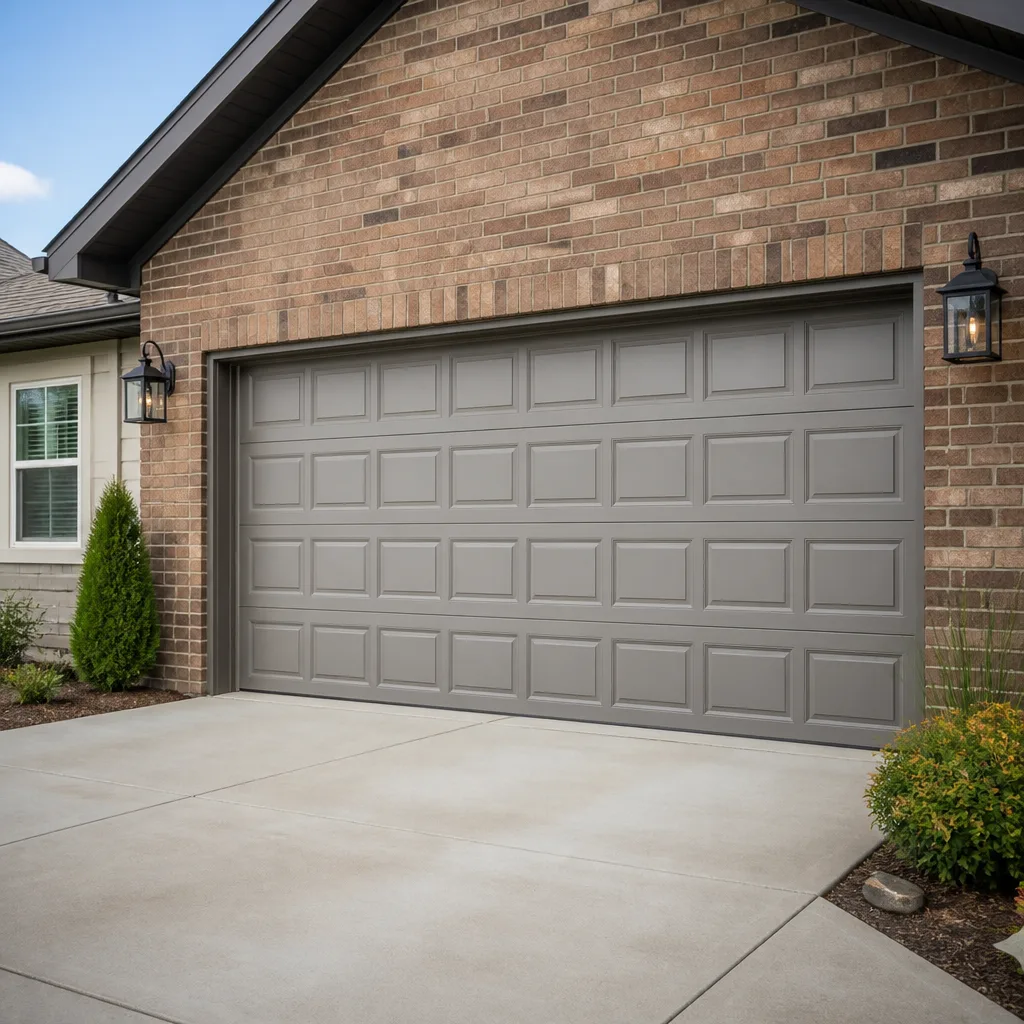 Raised-panel steel
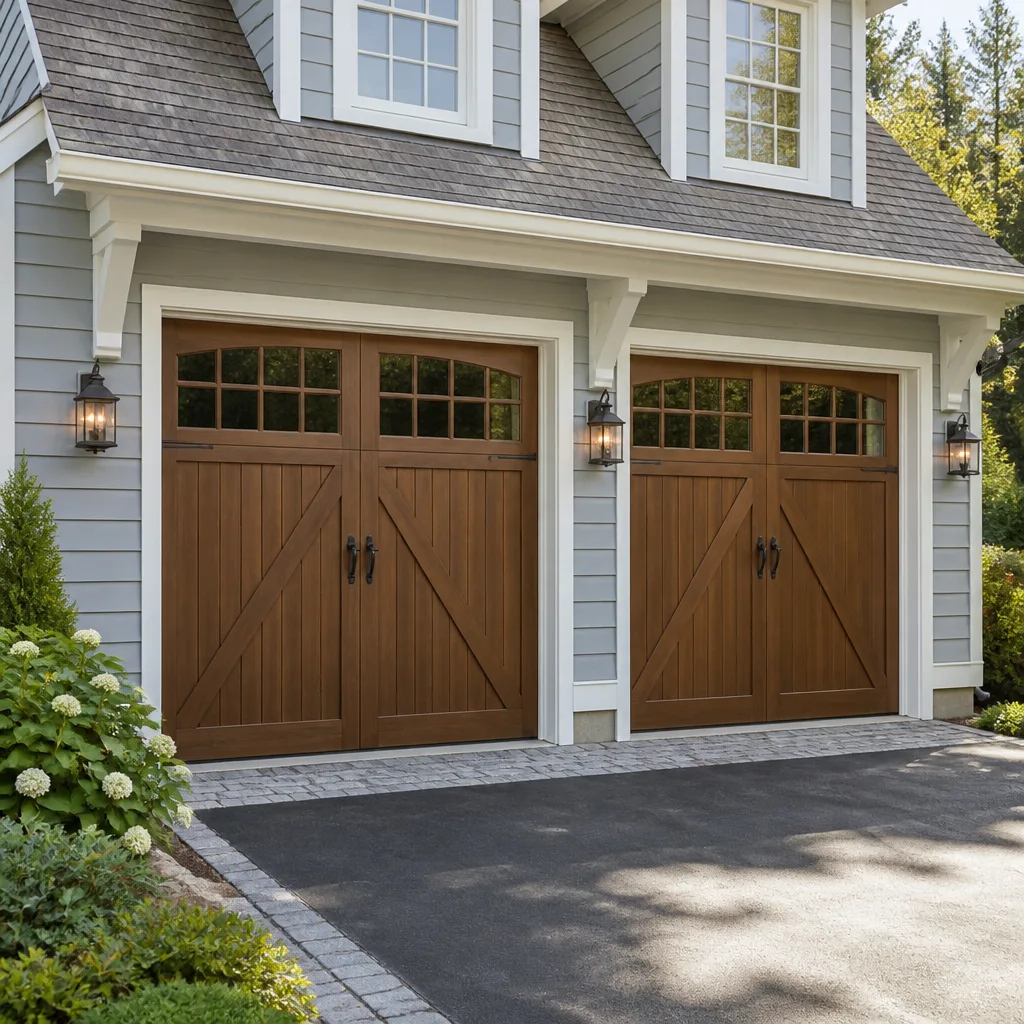 Carriage house
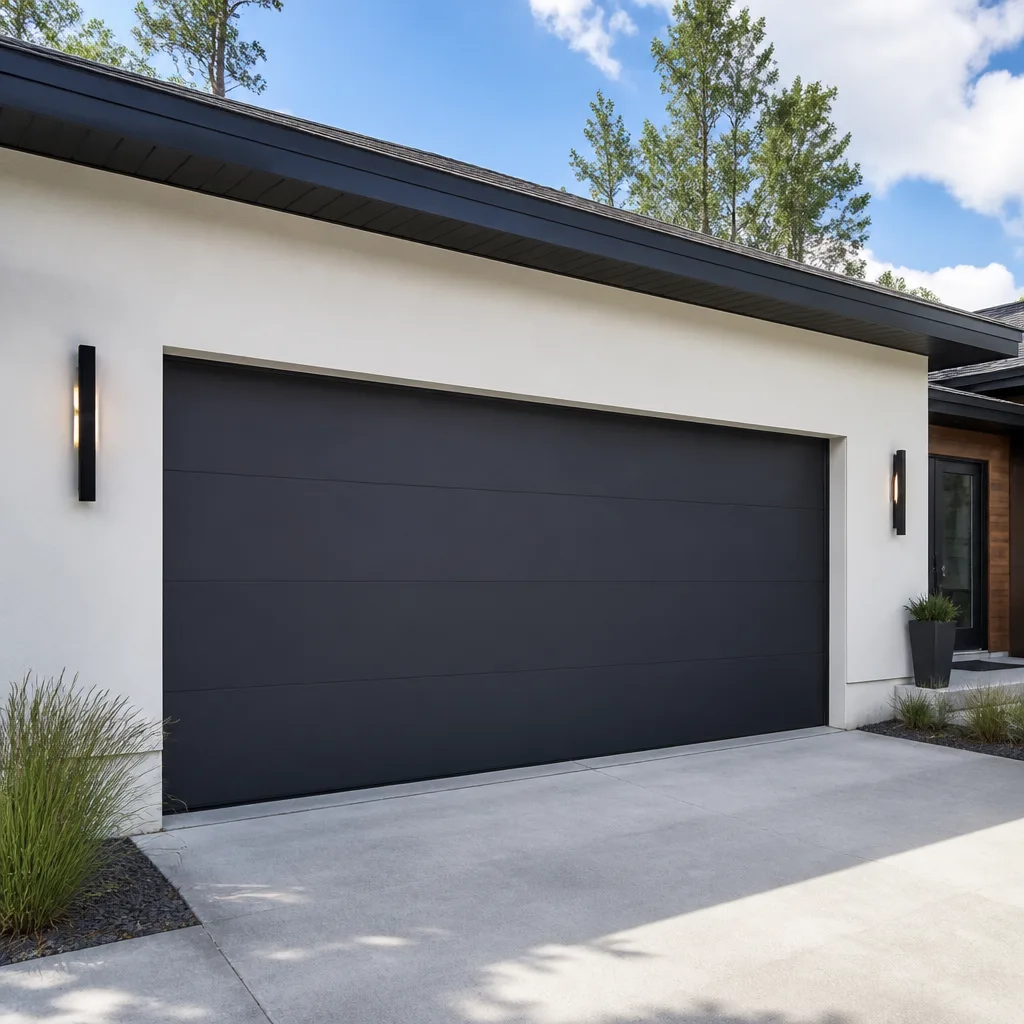 Modern flush
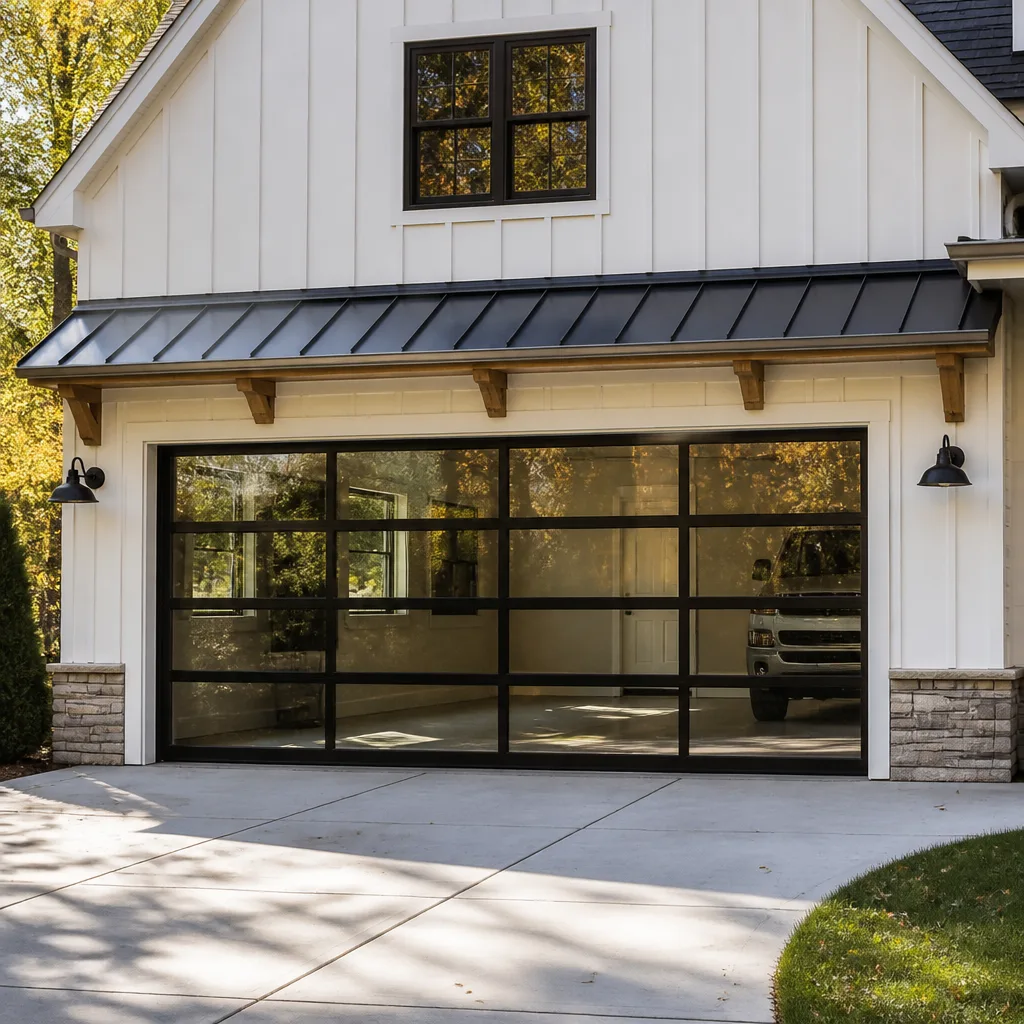 Full-view glass
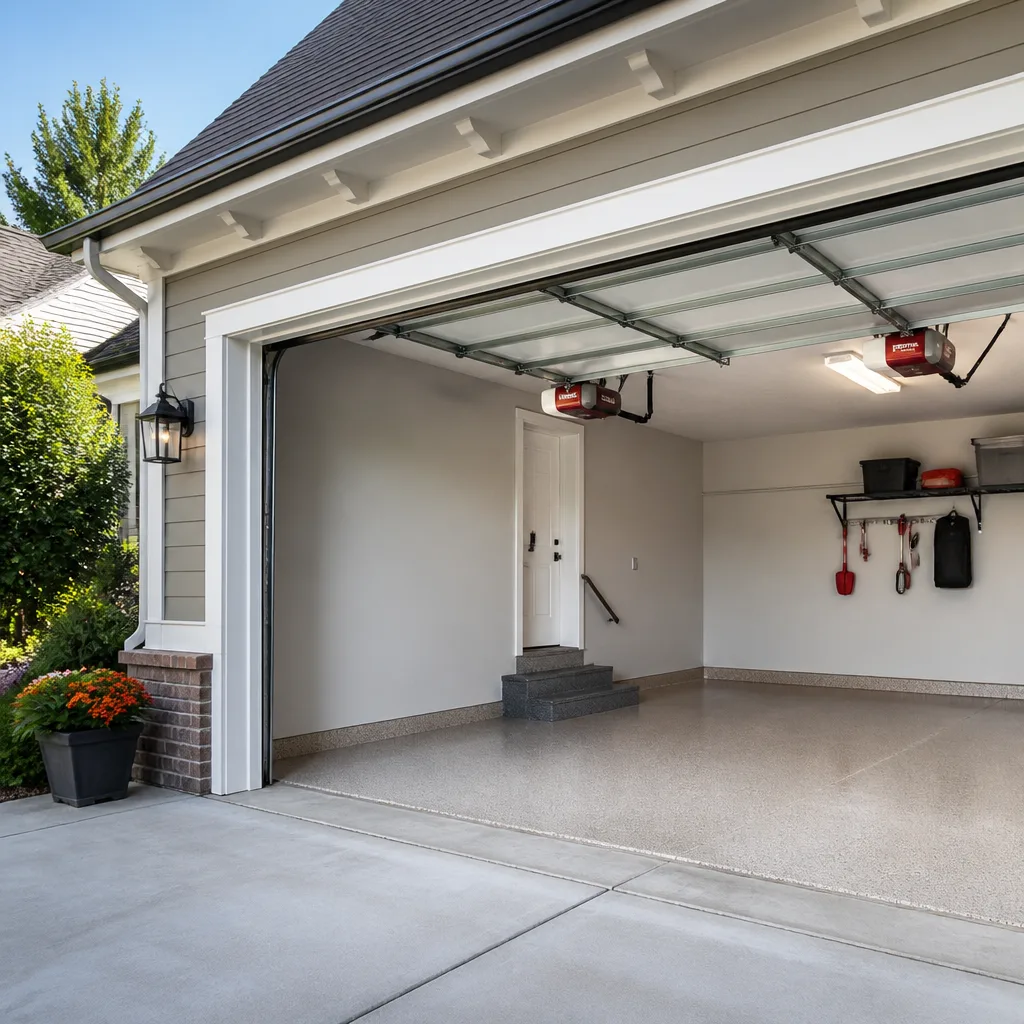 LiftMaster openers
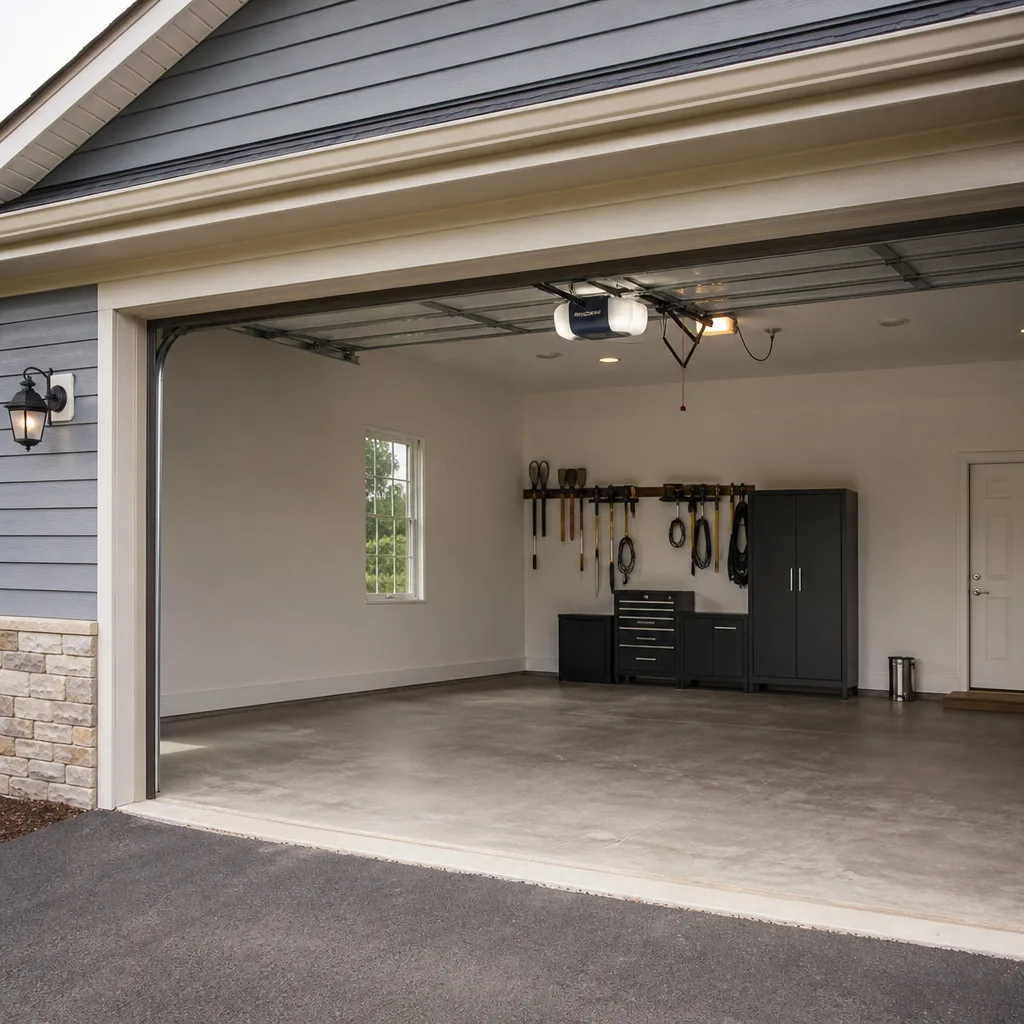 Chamberlain openers
Full 25-point door and opener safety check with every visit - springs, cables, rollers, tracks, and your LiftMaster or Chamberlain opener included
You get a price before we start. It does not change when the truck arrives.
Get your free estimateDIY vs Professional Garage Door: The Queens Homeowner’s Decision Guide
A garage door torsion spring stores enough energy when coiled that a mishandled winding bar during a DIY replacement can deliver a force equivalent to a baseball bat swing. That’s not hyperbole. It’s physics, and it’s why emergency rooms, not YouTube comments, are where the consequences of that repair gone wrong get documented. This guide draws a clear, honest line between what you can safely handle yourself in Queens and what belongs in the hands of a trained technician, and points you to more guides & resources when you need deeper help. You’ll learn which tasks are genuinely DIY-friendly, which ones carry real risk, what repairs actually cost in our borough, and how to spot the difference between a broken opener and one that just needs a 10-minute adjustment.
Quick Answer
Adjust the opener, replace weatherstripping, and lubricate hardware yourself. Leave torsion springs, cable drums, and trolley carriage replacements to a licensed technician. The physics of a coiled spring under 150 to 200 pounds of stored tension does not forgive a mistake, and in Queens, where attached garages share walls with living spaces, the stakes include your family, your car, and your homeowner’s insurance policy.
Styles & brands we work with
Table of Contents
- What’s Safe to DIY: The Full List
- What You Should Never DIY: The Mechanical Reasons
- Is Your Opener Broken or Just Miscalibrated?
- The NYC Insurance and Liability Angle
- What “I’ll Just Watch a YouTube Tutorial” Actually Costs
- What Garage Door Repairs Cost in Queens
- Common Mistakes to Avoid
- When to Call a Professional
What’s Safe to DIY: The Full List
Before we get to the dangerous stuff, let’s be clear about what you can absolutely handle yourself. These five tasks require no special tools, no spring tension work, and no risk of serious injury. They’re the garage door equivalent of changing a light bulb or tightening a cabinet hinge. In our experience serving Queens homes since 2001, these are also the tasks that get ignored longest, which is why so many “major” repairs we see started as minor maintenance that nobody did-exactly what our Garage Door Repair Maintenance Checklist for Queens Homeowners is designed to prevent.
1. Opener Remote Reprogramming
If your remote stopped working after a power outage or you bought a new one on Amazon, reprogramming takes about five minutes. Every major brand, including Chamberlain and Genie, prints the programming steps right on the motor unit or in a quick-start card. Hold the learn button, press the remote button, done. No tools, no risk, no service call needed.
2. Limit Switch Adjustment
The limit switch controls how far the door travels up and down. If your door stops an inch short of the floor or reverses before fully closing, the limit dials on the opener motor unit are usually the culprit. On most Chamberlain and Genie models, these are clearly labeled plastic dials you turn with a flathead screwdriver. Quarter-turn adjustments, test, repeat. This is the single most common “broken opener” fix we perform in Queens, and it takes about 10 minutes.
3. Photo-Eye Cleaning and Realignment
The photo-eye sensors sit near the floor on both sides of the door opening. When they get dusty, covered in road grime, or knocked out of alignment by a garbage can or bike, the door refuses to close. Wipe the lenses with a dry cloth and gently adjust the sensor brackets until the small indicator lights glow steady. This fixes roughly one in three “my door won’t close” calls before we even pick up the phone.
4. Weatherstripping Replacement
The rubber seal along the bottom of your door and the vinyl trim around the frame wear out every few years, especially in Queens where winter road salt eats at rubber compounds. Replacing bottom seal is a slide-out, slide-in job on most doors. Side and top trim pulls off and presses back on. It’s tedious but completely safe, and it matters more in our climate than homeowners realize. Gaps let in cold air, mice, and in neighborhoods like Astoria and Long Island City, a surprising amount of street dust.
5. Roller Lubrication
Metal rollers on metal tracks get noisy and stiff without maintenance. A spray of white lithium grease or silicone lubricant on the rollers, hinges, and spring coils twice a year keeps a door operating smoothly. Never use WD-40 as a permanent lubricant. It’s a solvent that strips existing grease and leaves metal parts drier than before.
What You Should Never DIY: The Mechanical Reasons
Now the line. These three repairs account for most of the serious garage door injuries that happen every year, and each one has a specific mechanical reason it’s dangerous. Not a general “it’s complicated” reason. A specific, physical reason rooted in how the door system actually works.
Torsion Spring Winding and Replacement: Stored Tension
The torsion spring is the large coil mounted horizontally above the door opening. It does most of the lifting, counterbalancing the weight of a 150 to 400 pound door so the opener motor only handles a fraction of the load. When that spring is wound, it holds between 150 and 200 pounds of rotational force. The winding bars used to tension it are 18-inch steel rods. If a bar slips out of the winding cone while you’re applying force, the spring snaps back with all that stored energy. That’s the baseball bat swing. People have broken wrists, forearms, and jaws. This is the garage door repair where “watch a YouTube tutorial” is genuinely dangerous advice. We replace torsion springs in Queens homes every week, and every single one of our technicians was trained on this repair for months before doing one solo.
Cable Drum Replacement: Requires Spring Detensioning First
The cables that lift your door run up the sides and wrap around grooved drums at the top. When a cable frays or snaps, the drum needs replacement. But here’s what most tutorials don’t emphasize: you can’t safely remove the cable drum without first releasing the tension from the torsion spring. The cable is under load. Cutting or unbolting it while tensioned is how cable ends whip across a garage. The correct procedure is detension the spring, swap the drum, rewind the spring. That’s a professional sequence, not a weekend project.
Trolley Carriage Swap on a Belt-Drive Opener: Rail Alignment
The trolley carriage is the plastic or metal sled that rides along the opener rail, connected to the door arm. On belt-drive models, which are common in Queens because they’re quieter in attached garages, the carriage must be aligned precisely along the rail or the belt wears unevenly and the door jerks. Replacing one means disassembling part of the rail, removing the belt, and reassembling under tension. Get the alignment off by a quarter inch and you’ll ruin a $50 belt within months. Most homeowners don’t have a torque reference for how tight the belt should feel, and overtightening is as damaging as leaving it loose.
Is Your Opener Broken or Just Miscalibrated?
This is the question that saves Queens homeowners the most money. In our experience, roughly a third of the “broken opener” diagnoses people make themselves turn out to be a limit switch or force adjustment a technician corrects in 10 minutes. Here’s how to check before you spend money on a service call or, worse, a new opener you don’t need.
The Five-Minute Opener Diagnostic
- Listen to the motor. Does it hum or click when you press the button? If yes, the motor is getting power and the logic board is responding. That points to adjustment, not failure.
- Watch the door’s travel. Does it stop short of the floor, reverse quickly, or travel a few inches then stop? Each of these points to a limit switch or force adjustment issue, both of which are dial-based fixes on most Chamberlain, Genie, and LiftMaster models.
- Check the photo-eyes. Are the small lights on both sensors lit and steady? A blinking light means misalignment or obstruction, which is why the door won’t close.
- Pull the manual release cord. Operate the door by hand. Does it lift smoothly with moderate effort? If it’s heavy or drops when halfway up, the springs are the problem, not the opener.
- Test the remote and wall button separately. If the wall button works but the remote doesn’t, it’s a programming or battery issue, not an opener failure.
If the door operates correctly through the wall button and the travel seems fine, your opener likely just needs a tune-up: limit adjustment, force-setting tweak, and lubrication. In Queens, a professional opener tune-up typically runs $95 to $175, far less than the $350 to $600 for a new opener installation you might have been quoted elsewhere. When you call Garage Door Opener Repair in Queens, ask specifically for a diagnostic visit before agreeing to any replacement.
The NYC Insurance and Liability Angle
Here’s what most DIY guides never mention, and in Queens it matters more than almost anywhere else in the country. If you attempt a torsion spring replacement yourself without understanding Garage Door Permits, Codes & Inspections in NY: What You Need to Know, and the mishandled spring damages your car, your door panels, or a wall, your homeowner’s insurance may deny the claim. Insurance policies cover sudden and accidental damage, but they typically exclude damage resulting from unlicensed work performed by the homeowner on a known high-risk component. The adjuster’s question will be direct: “Who replaced the spring?” If the answer is “I did,” you may be looking at the full cost of a new door, vehicle repair, and in worst cases, medical bills no policy will touch.
There’s a second angle specific to New York City. Many Queens homes are attached or semi-attached. A garage door failure that damages a shared wall or affects a neighbor’s property creates liability that extends beyond your own policy. When a professional performs the repair, their insurance carries that liability. When you do it yourself, you carry it personally. For homeowners in attached housing, which is most of Queens, that’s a risk with no upside.
What “I’ll Just Watch a YouTube Tutorial” Actually Costs
The math on DIY garage door repair is painful because it’s so predictable. A torsion spring replacement in Queens averages $180 to $340 for a professional, including the springs, labor, and a written guarantee. The spring itself costs $50 to $90 online. That difference is what tempts people into the garage with a winding bar set and a phone propped up playing a tutorial.
Here’s what happens when it goes wrong, and we’ve been the second call in dozens of these scenarios across Queens: The homeowner gets the spring half-wound, the bar slips, and the door slams down. Or they get the spring tensioned but the door doesn’t balance, so it crashes when released. Or they finish the job, it works for three weeks, and then the spring snaps because it was overwound. The emergency repair call to fix a botched DIY job runs $450 to $800, because now the technician has to undo the damage, possibly replace bent panels or damaged cables, and redo the job correctly. You were trying to save $150. You’re now paying triple the original professional rate. And the original repair wasn’t $300, it was $300 minus what a professional guarantees. When you call Garage Door Repair in Queens, the price is written down before any work starts, and the repair is backed in writing for 365 days. A tutorial gives you neither.
What Garage Door Repairs Cost in Queens
Knowing the real price range before you call prevents both sticker shock and getting taken advantage of. These are the ranges we’ve seen across Queens in the past year, from Bayside to the Rockaways and everywhere between. Like any borough with this much housing variety, costs shift based on door type, spring size, opener brand, and accessibility. But these are honest ranges for our market.
Queens Garage Door Repair Pricing Guide
| Repair Type | Typical Cost Range | Notes |
|---|---|---|
| Torsion spring replacement (single) | $180 – $280 | Includes spring, labor, written guarantee |
| Torsion spring replacement (double) | $280 – $420 | Both springs, common on 2-car doors |
| Cable replacement (both sides) | $150 – $250 | Includes drum inspection and lubrication |
| Opener repair / tune-up | $95 – $175 | Limit and force adjustment, lubrication |
| Opener installation (new) | $350 – $650 | Includes labor, programming, disposal |
| Roller replacement (set of 10-12) | $120 – $200 | Reduces noise and wear |
| Bottom seal replacement | $80 – $140 | Includes weatherproofing inspection |
| Emergency repair (after botched DIY) | $450 – $800 | Undoing damage plus correct repair |
Every professional repair in Queens should come with three things: a written price before work starts, a written guarantee, and a stated response time window. If a company won’t put the price in writing, that’s a red flag. If they won’t guarantee the work, that’s another. None of this applies to the DIY route, which is why the “savings” comparison is rarely apples to apples.
Common Mistakes to Avoid
- Using the wrong lubricant on torsion springs. WD-40 strips the protective grease and accelerates rust. In a humid borough like Queens, near the water especially, that means a spring that snaps years early. Use white lithium grease or silicone spray instead.
- Believing the opener motor lifts the door. The springs lift the door. The opener just guides it. If your door feels heavy when operated manually, the opener is straining against failing springs, and replacing the opener won’t fix it. You’ll just burn out the new motor.
- Adjusting a torsion spring with the door open. The spring carries maximum tension when the door is closed. Working on it with the door up is how winding bars get launched across a garage. Even for inspection, the door should be in the closed position.
- Reusing old cables with new springs. The cables and springs wear together. New springs with frayed cables means the cables snap within weeks, and you’re paying for the repair twice. A professional replaces both as a set. In our experience, Queens homeowners who DIY spring replacements and skip the cables are calling us within a month.
- Ignoring a slow or jerky door. A door that operates slowly or jerks on the way up is telling you something: worn rollers, dry hinges, or a spring losing tension. Waiting for a full failure turns a $95 tune-up into a $280 spring replacement.
- Programming a new remote without clearing old codes. If you add a remote but don’t clear the opener’s memory first, old remotes you’ve lost still work. For Queens homeowners in attached housing or with street-level garages, that’s a security gap, not a convenience issue.
- Using extension cords for a new opener installation. Openers draw enough current that a long, thin extension cord creates voltage drop. The motor runs hotter and the logic board can fail. Permanent wiring is code, and in New York City, electrical code compliance matters for insurance.
When to Call a Professional
Call a professional when the repair involves spring tension, cable replacement, or anything requiring realignment of the rail system. Call when the door makes a loud bang you can hear from inside the house. Call when the door won’t open at all and your car is trapped inside. Call when you’ve already attempted a fix and the door works worse than before. And call when the thought of a stranger at your door is the thing keeping you from making the call at all. That last one matters more than most companies admit. Doyle Garage Doors Queens sends every customer the technician’s name and photo before the visit, along with a written price before any work starts. When the doorbell rings, you know exactly who’s behind it. We offer free estimates throughout Queens, and a live person answers 24/7, day, night, weekends, and holidays. Call (585) 440-5777 and Aaron Teague or one of our team members will talk through what you’re seeing before you commit to anything.
See the difference
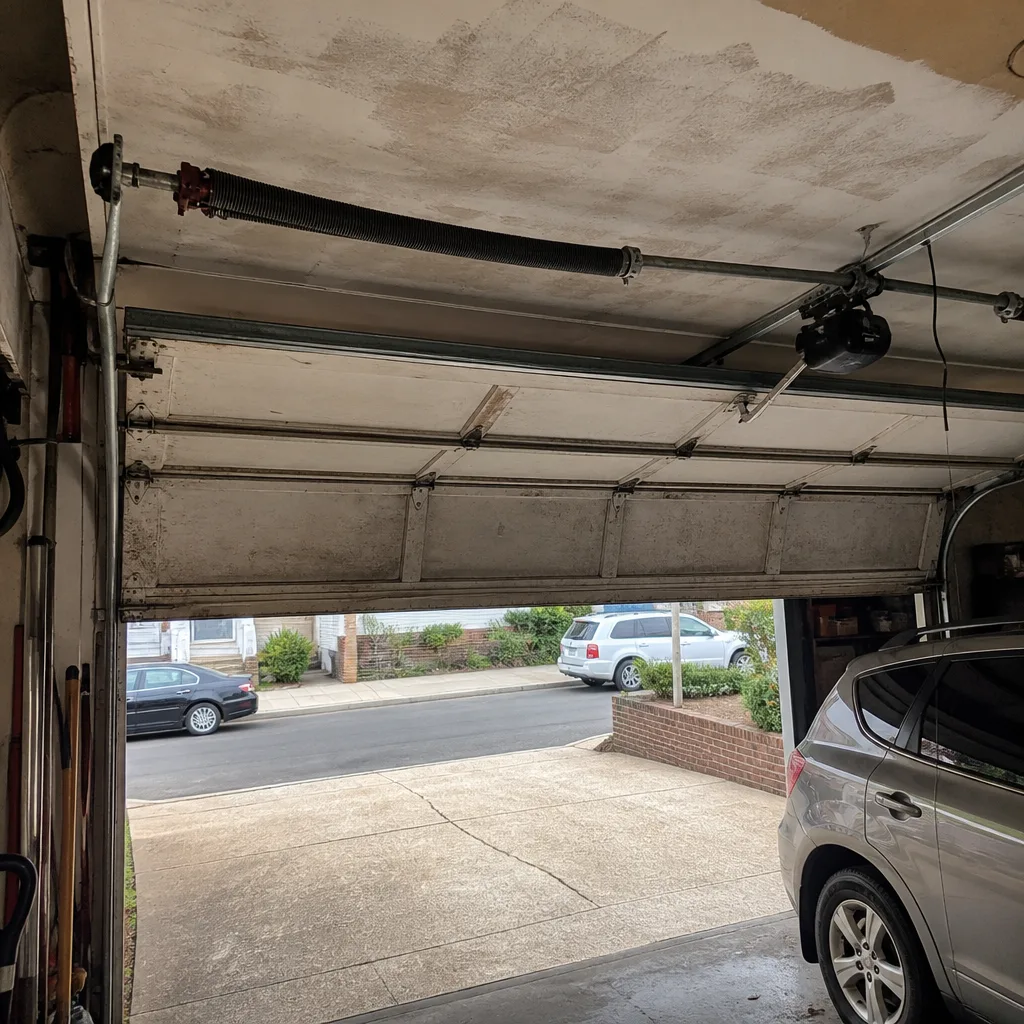 Before
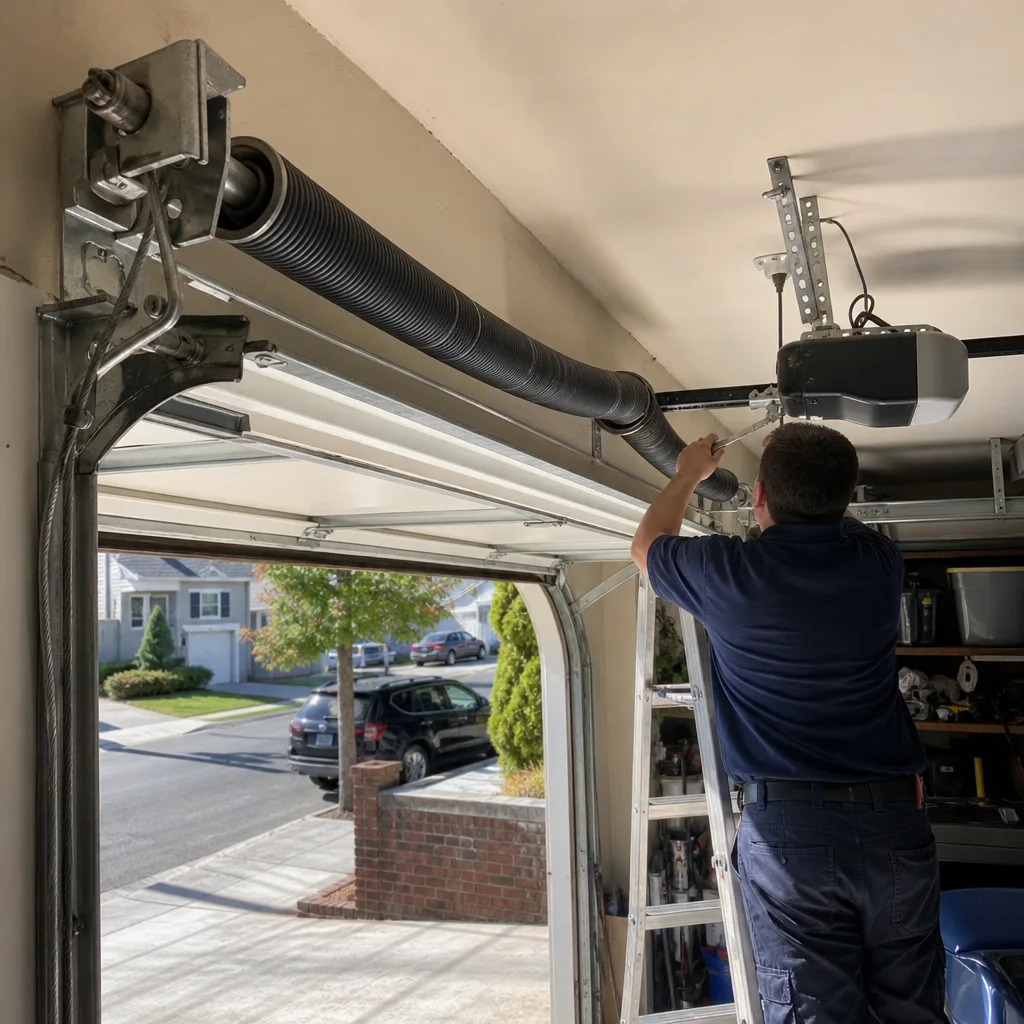 After
After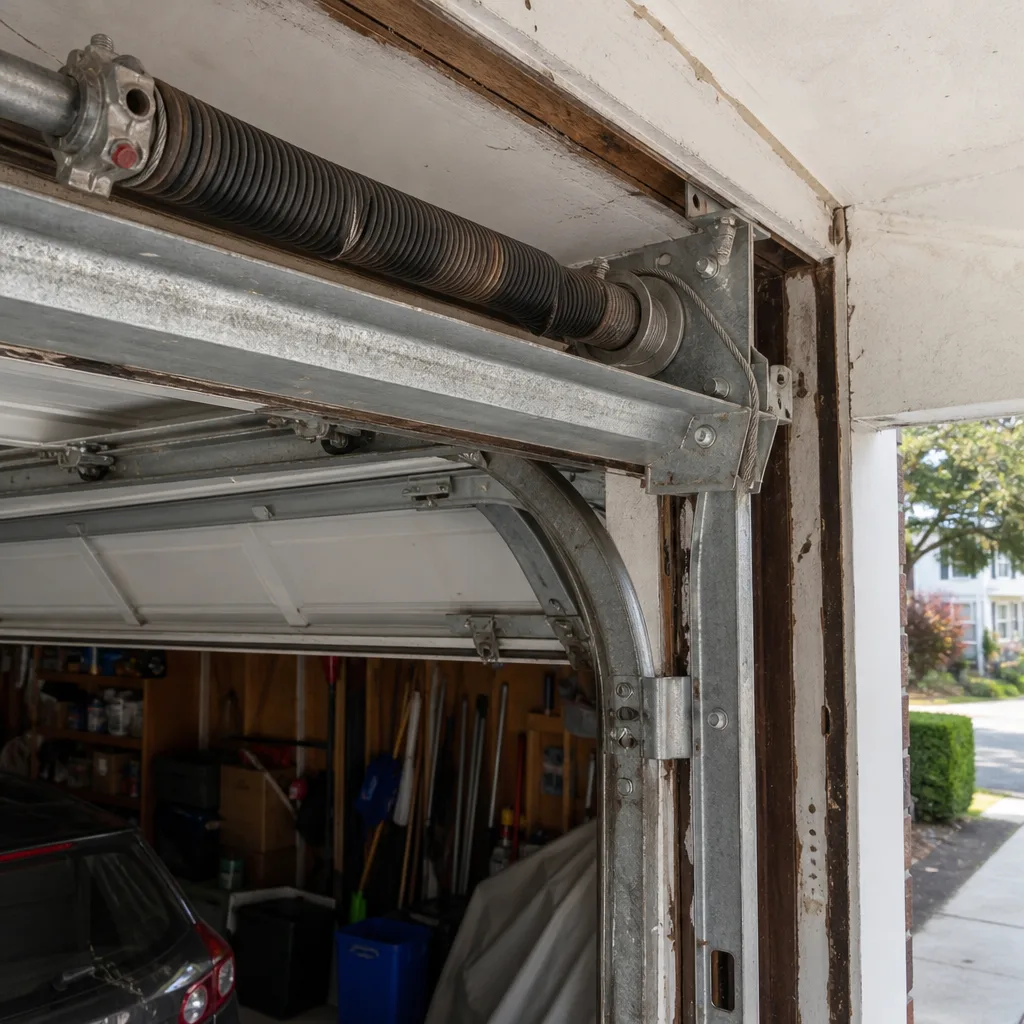 Before
 After
After Before
 After
AfterFrequently Asked Questions
No. A torsion spring under 150 to 200 pounds of stored tension can deliver the force of a baseball bat swing if the winding bar slips, and the injuries are well documented in emergency room records. In Queens, a professional replacement costs $180 to $280 for a single spring and includes a written guarantee, which is far cheaper than the medical bill or the $450 to $800 emergency repair after a failed DIY attempt. Call (585) 440-5777 for a written quote.
A single torsion spring replacement in Queens typically costs $180 to $280, and a double spring replacement runs $280 to $420, including labor and a written guarantee. The exact price depends on the spring size, which is determined by door weight and height. Call us at (585) 440-5777 and we’ll give you an exact written quote before any work starts.
If the opener motor runs but the door doesn’t travel correctly, a $95 to $175 tune-up usually fixes the problem, and that’s worth doing. If the motor is dead, the logic board is fried, or the unit is over 15 years old, replacement at $350 to $650 for a new Chamberlain or Genie opener with installation makes more sense. We’ll tell you which side of that line your opener falls on during a free estimate.
At Doyle Garage Doors Queens, no. The price is written down and handed to you before a single bolt is turned, and that written price does not change. If the technician finds something additional that needs attention, you’ll be told the price for that work separately, in writing, and you decide before anything else happens. Call (585) 440-5777 to schedule a diagnostic.
Yes. Our service trucks in Queens carry torsion springs in every common size, cables, drums, rollers, hinges, photo-eyes, and remotes for LiftMaster, Chamberlain, Genie, Clopay, Amarr, and other major brands. Most repair calls are completed in a single visit. The exception is a full door replacement or a new opener installation, where the exact model is ordered and scheduled. Most repairs are impossible to stock for, which is why callouts happen. But standard spring, cable, and roller work is done same-day.
A torsion spring replacement takes 45 to 90 minutes. A cable replacement is about the same. An opener tune-up runs 30 to 45 minutes. Most repairs are completed in one visit. The difference between a rushed job and a correct one, especially in Queens where many garages are attached to living spaces, is whether the technician takes the time to test the door balance and travel after the repair. We do that on every job.
Every repair from Doyle Garage Doors Queens includes a written 365-Day Done Right Promise. If the repair fails within 365 days from the date of service, we come back and make it right at no charge. No argument, no fine print, no prorated warranty. That guarantee is in writing on every job, and it applies automatically. Call (585) 440-5777 if anything doesn’t feel right.
The Bottom Line
The line between DIY and professional garage door work is not about skill, and it’s not about pride. It’s about physics. Tasks that involve no stored tension, no load-bearing cables, and no precise mechanical alignment are safe for any careful homeowner. Everything else should be left to someone who does it every day and carries insurance if something goes wrong. In Queens, where attached garages are common, the liability angle matters as much as the safety angle. And when you do call a professional, choose one who puts the price in writing before the work starts and sends you the technician’s name and photo before they arrive. Nobody should have to choose between a working garage door and the comfort of knowing who’s at the door. You shouldn’t have to make that trade, and with the right company, you don’t.
For a free estimate on any garage door repair, installation, or opener service in Queens, call (585) 440-5777. A live person answers 24/7, and we’ll give you a written price before any work begins. You can also explore our Doyle Garage Doors Queens home page or our Garage Door Installation in Queens guide for more on what to expect when you’re ready.
Written by Aaron Teague, Owner at Doyle Garage Doors Queens, serving Queens since 2001.