
Last updated October 16, 2026
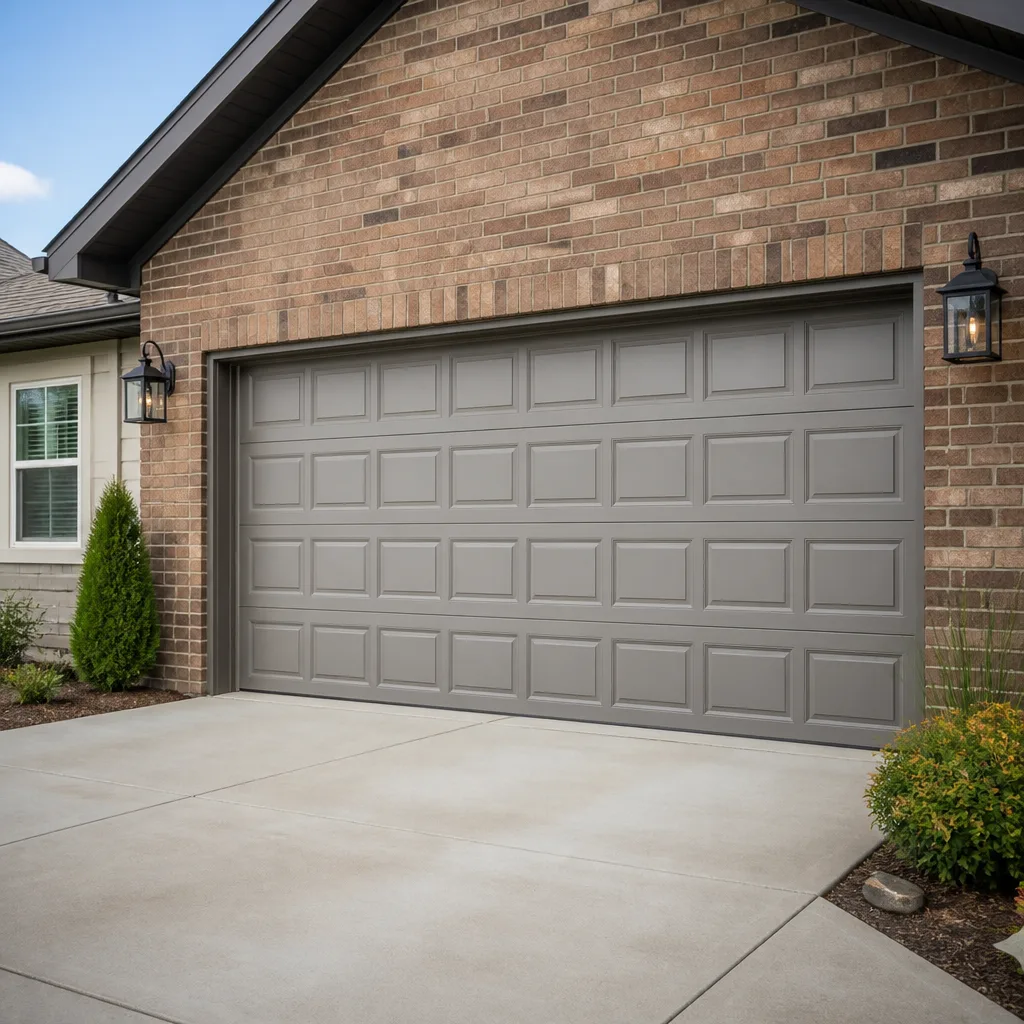 Raised-panel steel
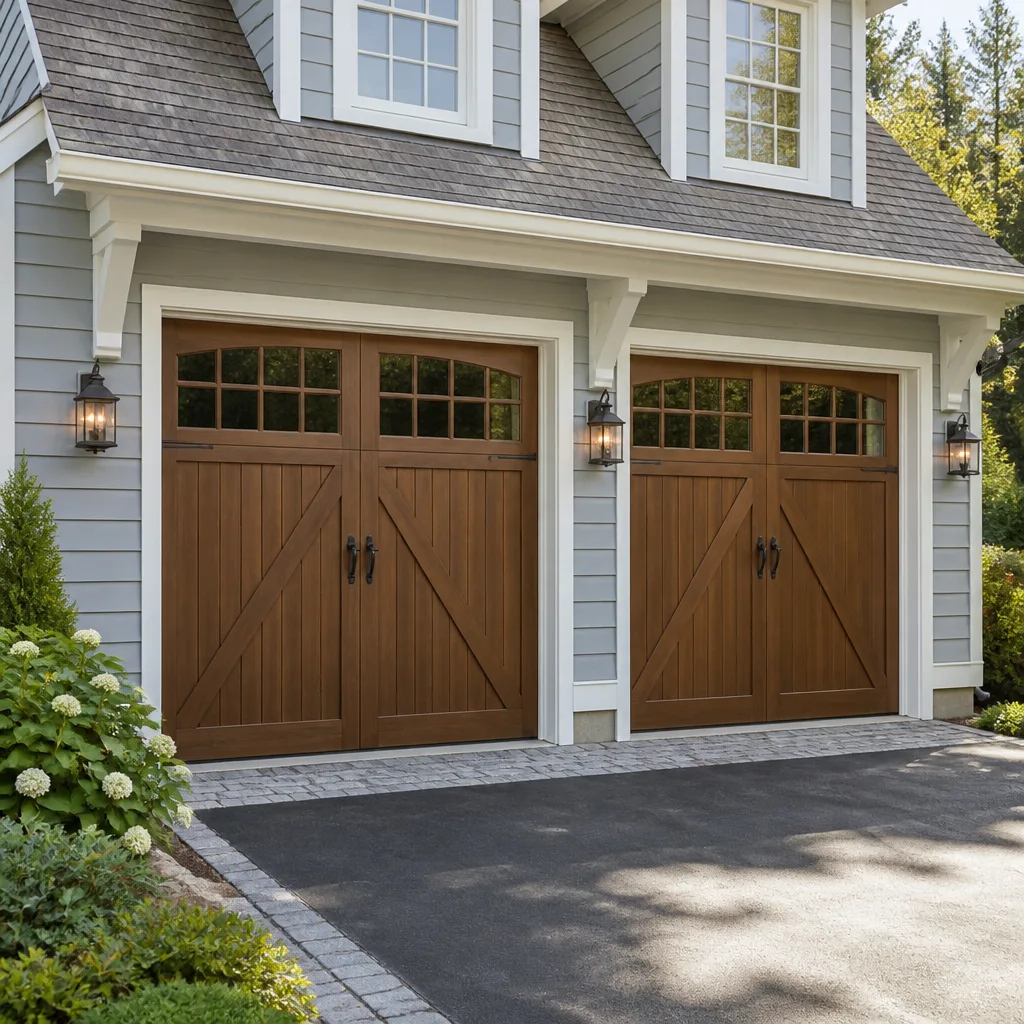 Carriage house
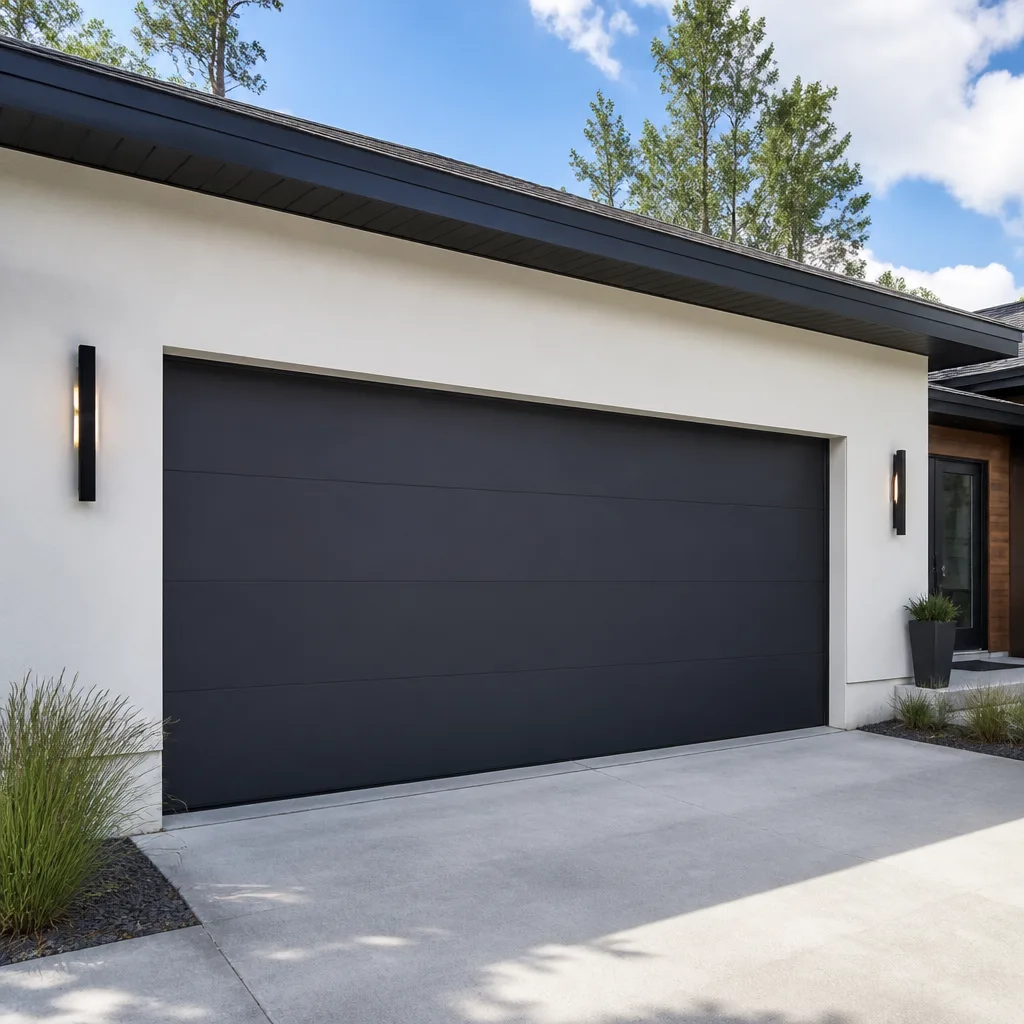 Modern flush
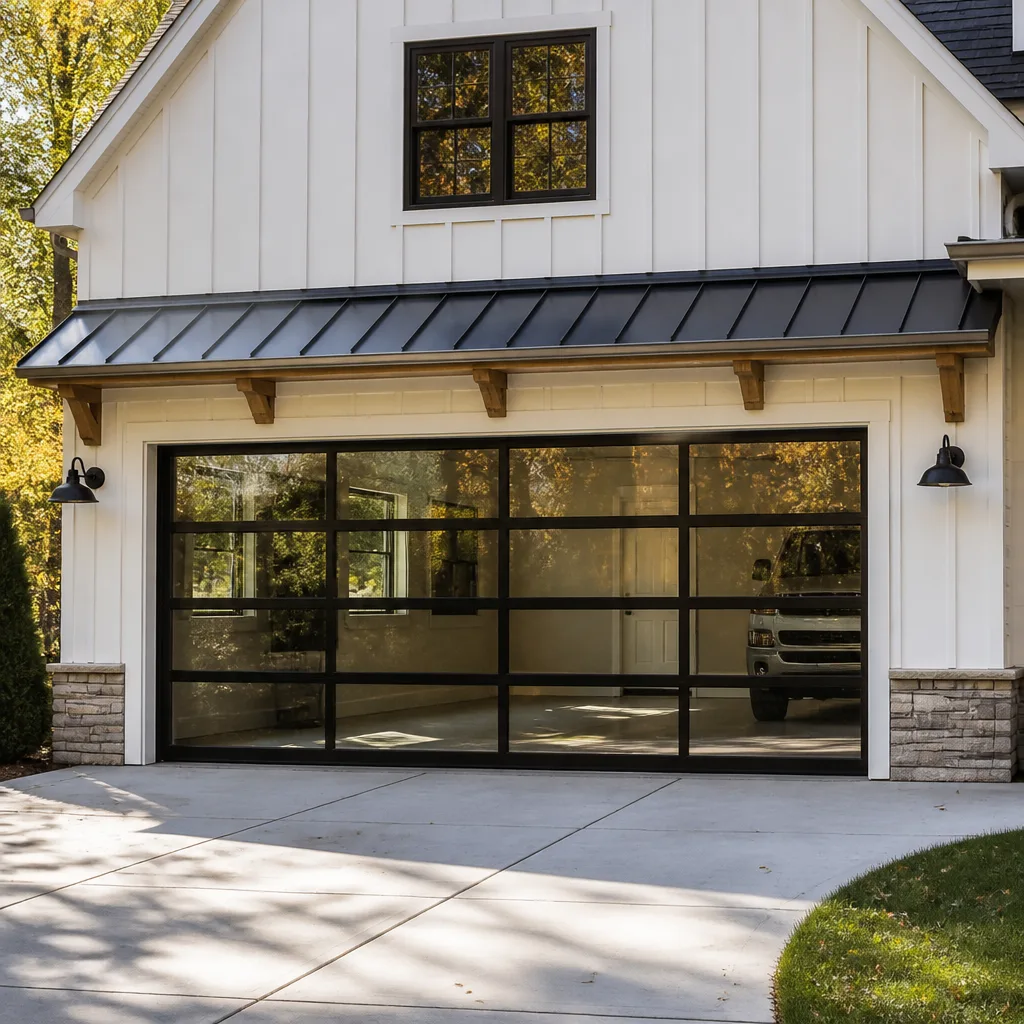 Full-view glass
 LiftMaster openers
 Chamberlain openers
Full 25-point door and opener safety check with every visit - springs, cables, rollers, tracks, and your LiftMaster or Chamberlain opener included
You get a price before we start. It does not change when the truck arrives.
Get your free estimateGarage Door Warning Signs: A Queens Homeowner’s Reference Guide
Here’s a number that should get your attention: a typical garage door opens and closes roughly 1,500 times a year. Each cycle puts tension on springs, torque on cables, and friction on rollers. And here’s the part most Queens homeowners don’t realize: almost every garage door failure that becomes an emergency, a snapped spring at 7 a.m. on a workday, a door that drops onto a car hood, a family locked out with the opener dead, was preceded by weeks or even months of warning signs that got ignored or written off as the door “just being noisy” or “acting a little funny.” This guide from Doyle Garage Doors Queens translates the eight most common sounds, behaviors, and visual symptoms into plain-language diagnoses, with a clear answer to the question everyone actually asks: how urgent is this, really? For a broader overview, see The Complete Guide to Garage Door in Queens.
Quick Answer
The most common garage door warning signs in Queens are grinding or squealing noises mid-travel (worn rollers or trolley carriage), a door that reverses before fully closing (photo-eye misalignment or a limit switch problem), an uneven gap between the door and the floor on one side (a broken spring cable, not a bent track), and an opener that hums and strains but won’t move the door (spring failure, not opener failure). Any of these symptoms means scheduling a garage door repair in Queens sooner rather than later. Torsion spring issues and cable problems need professional attention fast because both involve components under extreme tension.
Styles & brands we work with
Table of Contents
- Grinding Noise Mid-Travel: Trolley Carriage or Roller Wear
- Door Reverses Before It Closes: Photo-Eye or Limit Switch
- Uneven Gap at the Floor: Broken Spring Cable on One Side
- Opener Strains and Hums but Door Won’t Move: Spring Failure
- Torsion Spring vs. Broken Cable: Two Different Problems, Two Very Different Prices
- The 30-Second Visual Check: How to Inspect Your Torsion Spring
- The Slam Test: A Safe Way to Check Spring Tension on a Two-Spring System
- Three-Tier Urgency Rating: Do This Today, Schedule This Week, or Monitor
Grinding Noise Mid-Travel: Trolley Carriage or Roller Wear
A garage door that grinds, scrapes, or produces a metal-on-metal sound while moving is telling you something specific: a component that should be rolling is dragging instead. In most Queens homes, this traces to one of two parts. The first is the trolley carriage, the small assembly that travels along the opener rail and connects the opener arm to the door. When its internal wheels wear down, the carriage scrapes against the rail and produces a grinding noise that gets worse in cold weather. The second is the door rollers themselves. Rollers on a standard residential door should be replaced every five to seven years depending on use, and Queens winters with their freeze-thaw cycles and road salt tracked into the garage accelerate the wear. For tips on staying ahead of this wear, see our Seasonal Garage Door Care for Queens: Year-Round Homeowner’s Guide.
We’ve seen this pattern hundreds of times in neighborhoods like Forest Hills, Bayside, and Kew Gardens. A homeowner ignores a grinding noise for six months because the door still opens and closes. Then one morning the door jambs halfway up, the carriage has worn through, and the repair bill includes a new opener rail along with the carriage. What would have been a $120 to $190 roller or carriage replacement becomes a $400 to $650 job. The takeaway: grinding is never normal. A properly maintained garage door in Queens should produce a low, even rumble, not a scrape.
Door Reverses Before It Closes: Photo-Eye or Limit Switch
A garage door that reverses before it closes is not “being finicky.” It is a limit switch or photo-eye problem that, if ignored, will eventually cause the door to either refuse to close entirely or close on an object without stopping. That distinction matters more than most homeowners realize. The photo-eye sensors, the two small units mounted about six inches off the floor on either side of the door opening, send an invisible beam across the doorway. If that beam is broken by dirt, a leaf, or slight misalignment, the opener interprets it as an obstruction and reverses the door. This is a safety feature working correctly. The fix is usually simple: clean the lenses, realign the sensors, and test.
The limit switch, by contrast, is inside the opener motor unit and tells the door where “up” and “down” are. When it fails or drifts out of adjustment, the door may reverse partway through closing because the opener thinks it has hit an obstruction when it has not. This is a different problem with different urgency. A photo-eye issue can often wait a day or two. A limit switch that is failing will only get worse, and in some cases the door will close completely and then immediately reverse, or refuse to close at all. For a homeowner in Queens who needs their car out for a morning commute, that distinction is the difference between a minor annoyance and a missed day of work.
If the door reverses unpredictably, call a professional to diagnose whether you’re dealing with a sensor issue or a switch issue. Garage door opener repair in Queens for a limit switch replacement typically runs $140 to $220 including the part. Photo-eye cleaning and realignment often falls under a standard service call of $89 to $125.
Uneven Gap at the Floor: Broken Spring Cable on One Side
Stand in your garage with the door closed. Look at the gap between the bottom of the door and the concrete floor. If one side sits flush and the other side shows a visible gap of half an inch or more, do not assume the concrete settled unevenly. In our experience across Queens, from Astoria to the Rockaways, this is one of the most commonly misread symptoms in residential garages. An uneven gap usually means one of two things: a broken lift cable on one side, or a door that has come out of alignment due to a damaged hinge or bracket.
The lift cables are the steel cables that run up both sides of the door and wrap around a drum near the top. They work with the springs to counterbalance the door’s weight. When one cable snaps, that side of the door loses its support. The side with the intact cable pulls up, and the broken side sags. If you have a two-spring system and one spring has broken, the same symptom can appear because the remaining spring is doing all the work on one side only.
Here’s the safety part, stated plainly: a door with a broken cable or broken spring on one side is dangerous. The door weighs between 130 and 400 pounds depending on size and material. That weight is no longer evenly supported. If someone attempts to open the door manually, or if the opener attempts a cycle, the door can drop suddenly or twist in the track. In a worst-case scenario, the remaining cable snaps under the uneven load and the door comes down hard. If you see an uneven gap, stop using the door, unplug the opener, and call for service. A broken cable replacement in Queens typically costs $150 to $250 per side including the service call and labor. A torsion spring replacement runs $280 to $420 depending on the spring rating and door weight.
Opener Strains and Hums but Door Won’t Move: Spring Failure
You press the button. You hear the opener motor humming. The door doesn’t move. The hum sounds strained, like an engine trying to turn over but failing. Your first instinct might be to blame the opener. In most cases, the opener is fine. What has actually happened is that a torsion spring has broken, and the opener is now attempting to lift a 250-pound door with no counterbalance help. The motor is not designed for that load. It’s working, you can hear it working, but it cannot lift the door alone, and it should not try.
This is a crucial diagnostic distinction because it affects the price you will be quoted. A new opener installed in Queens runs $380 to $600 depending on the model and features. A torsion spring replacement is $280 to $420. If a technician comes out, swaps the opener, and leaves the broken spring in place, the new opener will fail prematurely, possibly within months, because it is still lifting an unbalanced door. A competent diagnosis starts with the spring, not the opener. When a homeowner calls us and describes the humming symptom, our first question is always the same: when was the last time the springs were inspected? If you’re evaluating companies, our How to Hire a Garage Door Contractor in Queens: A Step-by-Step Guide covers what to ask. A standard torsion spring has a cycle life, typically 10,000 cycles for a basic spring and up to 20,000 for a high-cycle spring. A household that uses the door four times a day hits 1,460 cycles a year. A 10,000-cycle spring lasts roughly seven years. If your home was built in 2015 and the springs are original, the math is not on your side.
Torsion Spring vs. Broken Cable: Two Different Problems, Two Very Different Prices
One of the most frequent misquotes we correct in Queens involves the difference between a torsion spring and a lift cable. These are two separate components with two separate functions, and confusing them leads to either an under-quote that balloons after diagnosis or an over-quote that replaces a part that was never the problem.
The torsion spring is the large coil, or pair of coils, mounted horizontally above the door opening. It stores mechanical energy by twisting when the door closes and releasing that energy to help lift the door when it opens. The torsion spring does most of the heavy lifting, literally. When it breaks, you typically hear a loud bang that sounds like a gunshot or a car backfiring. The door will not open, or it opens only a few inches, or the opener strains and hums as described above. A torsion spring replacement in Queens costs $280 to $420 for a single spring and $380 to $550 for a pair, with the higher end reflecting heavier doors like insulated two-car models or solid wood doors common in older Tudor homes in Forest Hills Gardens.
The lift cable, by contrast, is a thin steel braided cable that runs from a bracket at the bottom of the door up to a drum near the top. The cable’s job is to transfer the lifting force to the door itself. When a cable frays or snaps, you will often see it hanging loose or notice the uneven gap described earlier. The door may still partially operate if the cable on the other side remains intact, but it is operating unsafely. A cable replacement in Queens runs $150 to $250 per side including labor and the service call.
Here’s the key difference in plain terms: the spring lifts. The cable pulls. A broken spring usually means the door won’t open at all. A broken cable usually means the door opens crookedly or binds. If a technician quotes you a “spring cable” price without distinguishing the two, ask them to be specific about which part they’re replacing and why. A straightforward technician will show you the broken part and explain the repair before any work begins.
The 30-Second Visual Check: How to Inspect Your Torsion Spring
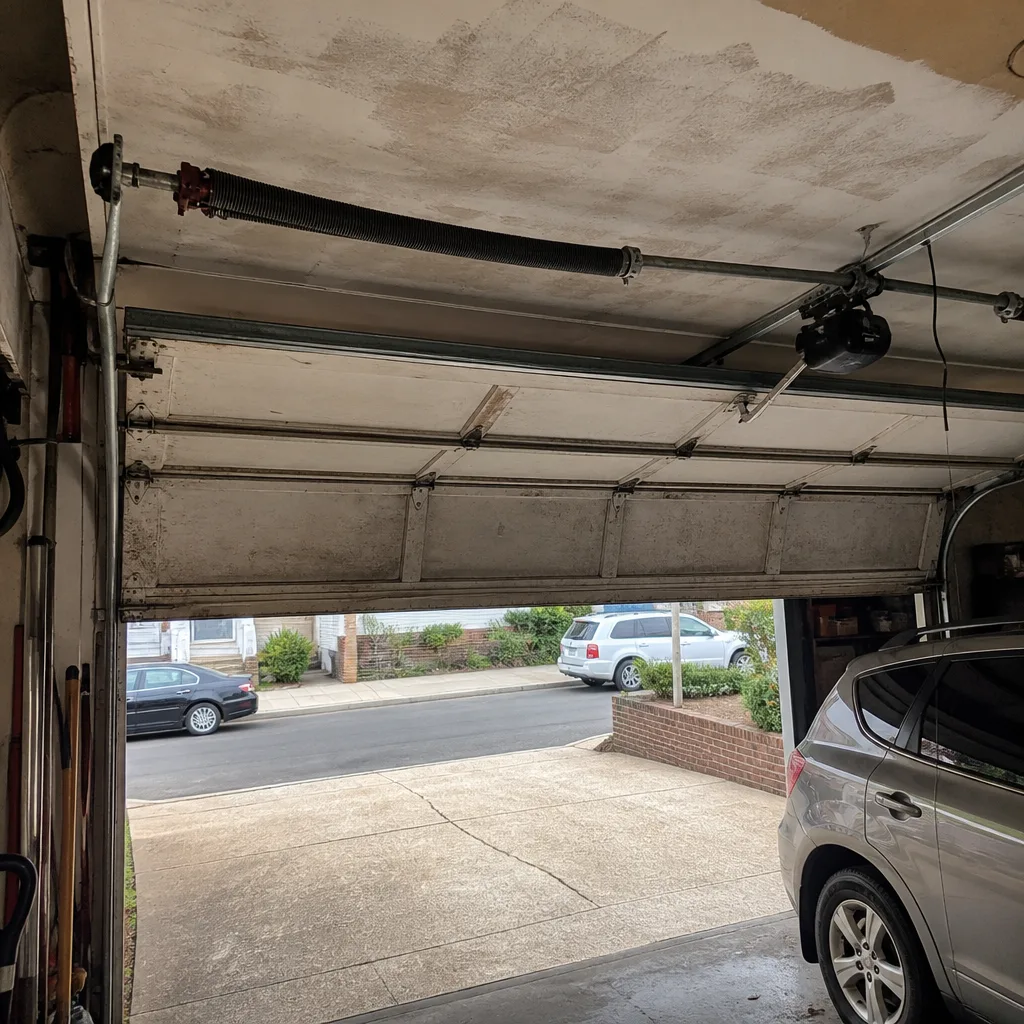
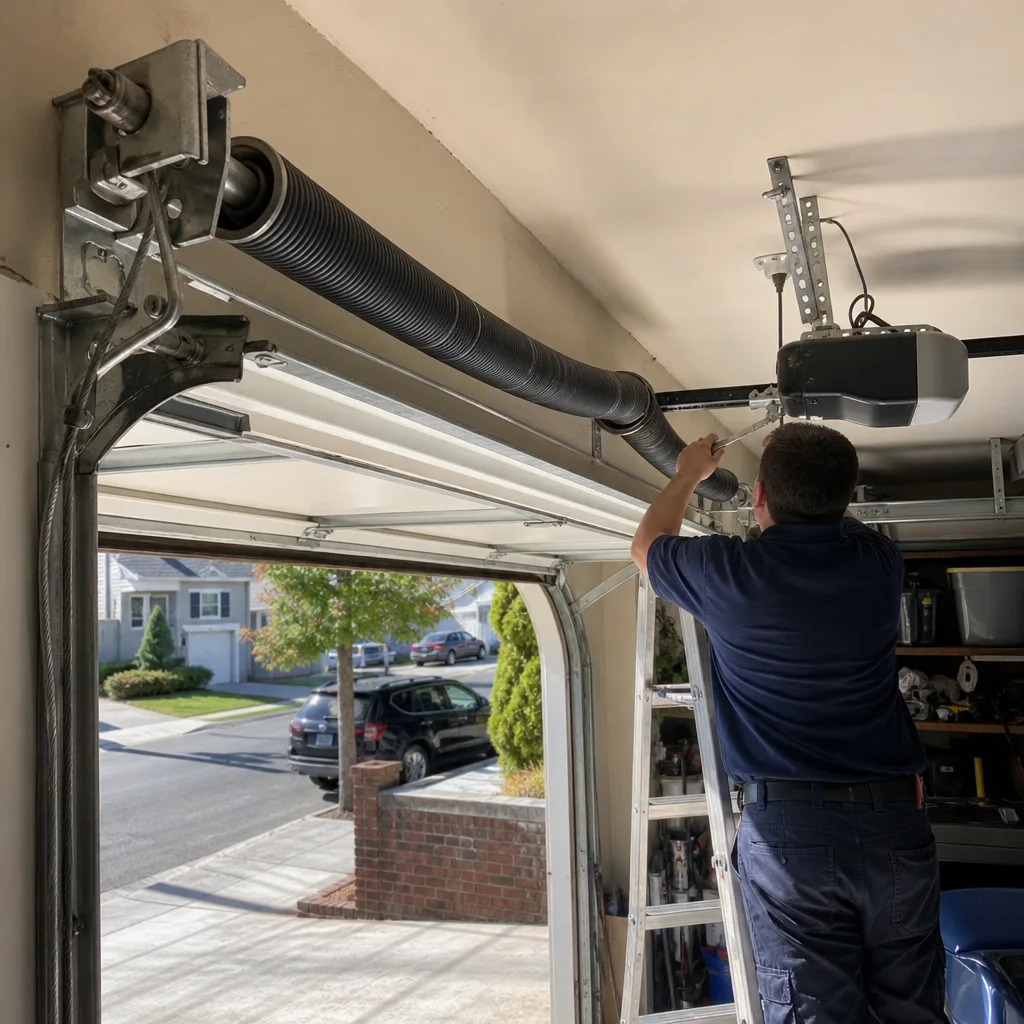
You can check your torsion spring in under 30 seconds without touching anything. Stand inside the garage with the door closed. Look up at the metal rod running horizontally above the door. If you have a two-spring system, you’ll see two long coils mounted side by side. A single-spring system has one coil.
Here’s what to look for, step by step:
- Look for a gap in the coil. A healthy torsion spring is one continuous coil from end to end. A broken spring will show a clear separation, often one to two inches, where the metal has snapped. The two halves will each still be wrapped around the rod, but the gap is unmistakable once you know to look for it.
- Check whether both springs look identical. On a two-spring system, the coils should have the same diameter, the same spacing between coils, and the same overall length. If one spring appears stretched or has visibly wider gaps between its coils, that spring has lost tension and is wearing out.
- Look for rust or corrosion. Surface rust on a torsion spring is not only cosmetic. Rust weakens the spring steel and accelerates metal fatigue. Queens garage environments, especially in attached garages where cars bring in rain, snow, and road salt, produce exactly the conditions that corrode springs prematurely.
What you are looking for is a visible gap. If you see one, the spring is broken and needs replacement. Do not attempt to open the door, even manually, and do not attempt to reset the opener. A broken torsion spring still holds stored energy, and the components around it remain under tension. This is a job for a trained technician with the correct winding bars and experience. Every technician at Doyle Garage Doors Queens is background-checked and identity-verified under the Threshold Standard, and we send the technician’s name and photo before the visit so you know exactly who is arriving.
The Slam Test: A Safe Way to Check Spring Tension on a Two-Spring System
Most Queens homes with a two-car garage or a heavier door have a two-spring system. When both springs are balanced, the door lifts smoothly and stays in place when opened manually. When one spring weakens or one has already been replaced without the other, the door behaves unpredictably. The slam test is a safe, manual method for detecting unequal spring tension before it becomes a safety hazard.
Here’s how it works:
- Disconnect the opener. Pull the red emergency release cord hanging from the opener rail. This disconnects the door from the motor, allowing you to operate the door by hand.
- Lift the door halfway by hand. Stand to the side, not directly under the door, and lift using the handle or the bottom of the door. Raise it to the halfway point, around waist to chest height.
- Release it gently. Let go. A properly balanced door will stay roughly in place, drifting no more than a few inches up or down. A door with unequal spring tension will move noticeably in one direction, either dropping or rising on its own.
- Repeat at different heights. Try the same test with the door a quarter of the way up and three-quarters of the way up. Unequal tension often shows most clearly at the halfway mark, but testing at multiple points gives a fuller picture.
If the door slams down when you release it, that’s a serious imbalance, and the door is not safe to operate. If it creeps up on its own, the springs are over-tensioned and the opener will work harder than it should. Either way, schedule a professional inspection. A spring re-balance or replacement addressed early costs far less than replacing a bent track or a burned-out opener later. We’ve seen doors slam hard enough to shatter roller brackets and bend the horizontal track sections in attached garages across Queens, repairs that run $500 to $800 because the initial spring issue went unaddressed.
Three-Tier Urgency Rating: Do This Today, Schedule This Week, or Monitor
Not every garage door symptom is an emergency. But some are, and knowing the difference is what keeps a $200 repair from becoming an $800 repair. Here’s how we classify the symptoms described in this guide, based on what we’ve seen across Queens, from the attached garages of Bayside to the detached garages of Whitestone:
Tier 1: Do This Today
- Broken torsion spring, visible gap in the coil. The door is not counterbalanced and is dangerous to operate. Stop using it immediately.
- Door slams down during the slam test. This means a significant imbalance that can cause the door to drop without warning.
- Uneven gap at the floor combined with a visible hanging or frayed cable. The door is supported unevenly and should not be opened.
- Opener hums loudly and the door does not move. The motor is straining against a broken spring or a jammed track. Continuing to press the button will burn out the opener motor, adding $380 to $600 to the necessary repair.
Tier 2: Schedule This Week
- Grinding or scraping noise mid-travel. The door still works, but a worn roller or trolley carriage is damaging the track and the opener. The longer it runs, the more it costs to fix.
- Door reverses before fully closing intermittently. A photo-eye that works sometimes is a sensor that is failing or drifting. It’s inconvenient now, but it will become a full failure, and a door that won’t close is a security problem.
- One spring looks stretched or has wider coil spacing than its partner. The spring is losing tension and will fail. The only question is when, not if.
Tier 3: Monitor and Maintain
- General operational noise that is consistent and even. A low rumble is normal. Listen for changes in pitch or rhythm over time.
- Slight cosmetic rust on door panels or hardware. Address it with appropriate coatings before it spreads, but it is not an immediate functional concern.
- Door slightly off-balance but still holds position in the slam test. Schedule an inspection and possible spring adjustment at your next service interval.
For a broader look at the services we provide across the borough, start with Doyle Garage Doors Queens home page, which outlines full repair and installation options.
Common Mistakes to Avoid
- Ignoring a loud bang and continuing to use the door. That bang was the torsion spring breaking. Every subsequent use of the door, manual or automatic, puts all the weight on the remaining cable and spring, or on the opener motor alone. Each cycle increases the risk of the door dropping.
- Repeatedly pressing the opener button when the door won’t move. If the opener hums and the door doesn’t budge, pressing the button again and again is a fast way to burn out the motor. One press should tell you everything you need to know.
- Replacing the opener without checking the springs. A new opener on a door with a broken or weak spring is a new opener with a shortened lifespan. The spring is the foundation. The opener is the accessory.
- Using WD-40 on garage door rollers or hinges. WD-40 is a solvent, not a lubricant. It will strip existing grease and leave the metal dry, which makes the grinding worse. Use a silicone-based or lithium-based garage door lubricant instead.
- Attempting to replace a torsion spring by watching a video. Torsion springs store an enormous amount of energy. Without the correct winding bars and experience, attempting this repair causes serious injuries every single year. This is not a DIY job.
- Assuming an older door is automatically safer because it has worked for years. Age is not a safety feature. A torsion spring with 15,000 cycles on a 10,000-cycle rating is a failure waiting for a specific moment, usually the worst possible one.
See the difference
 Before
 After
After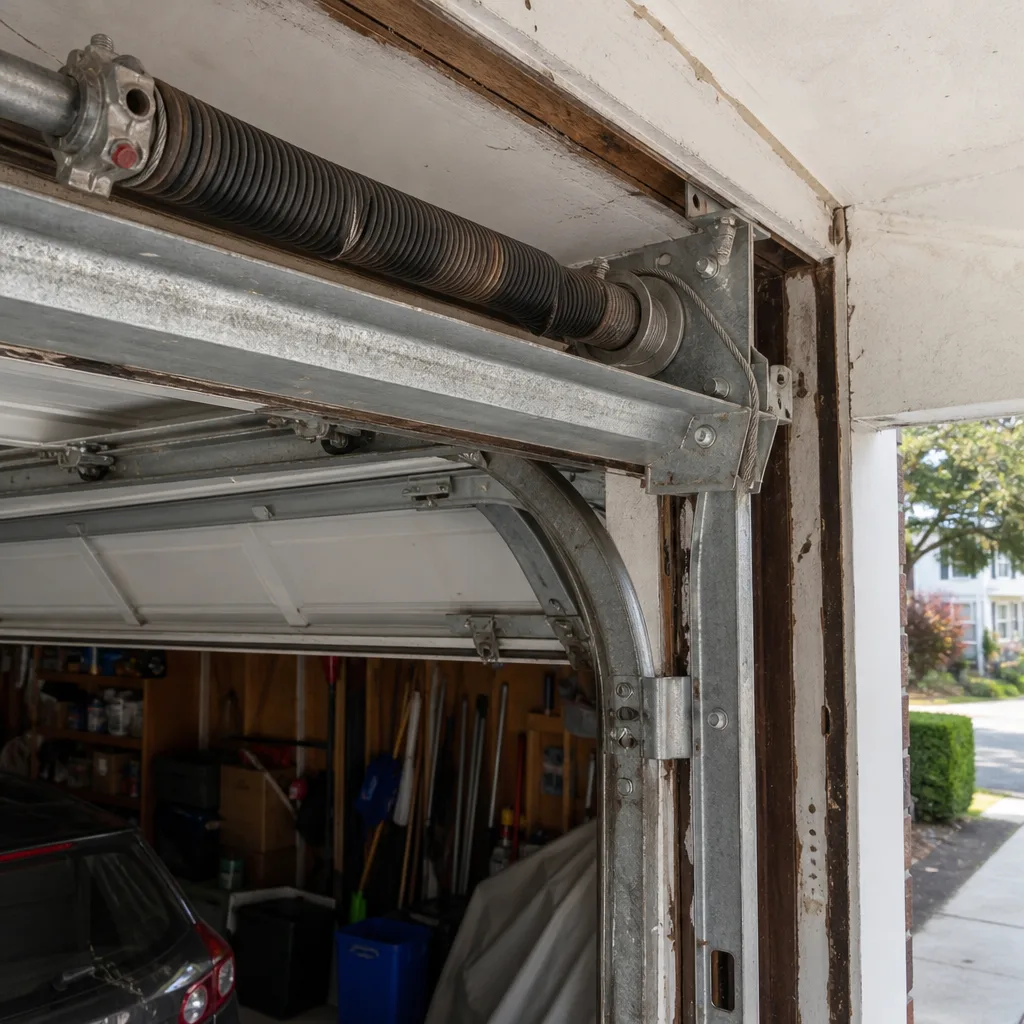 Before
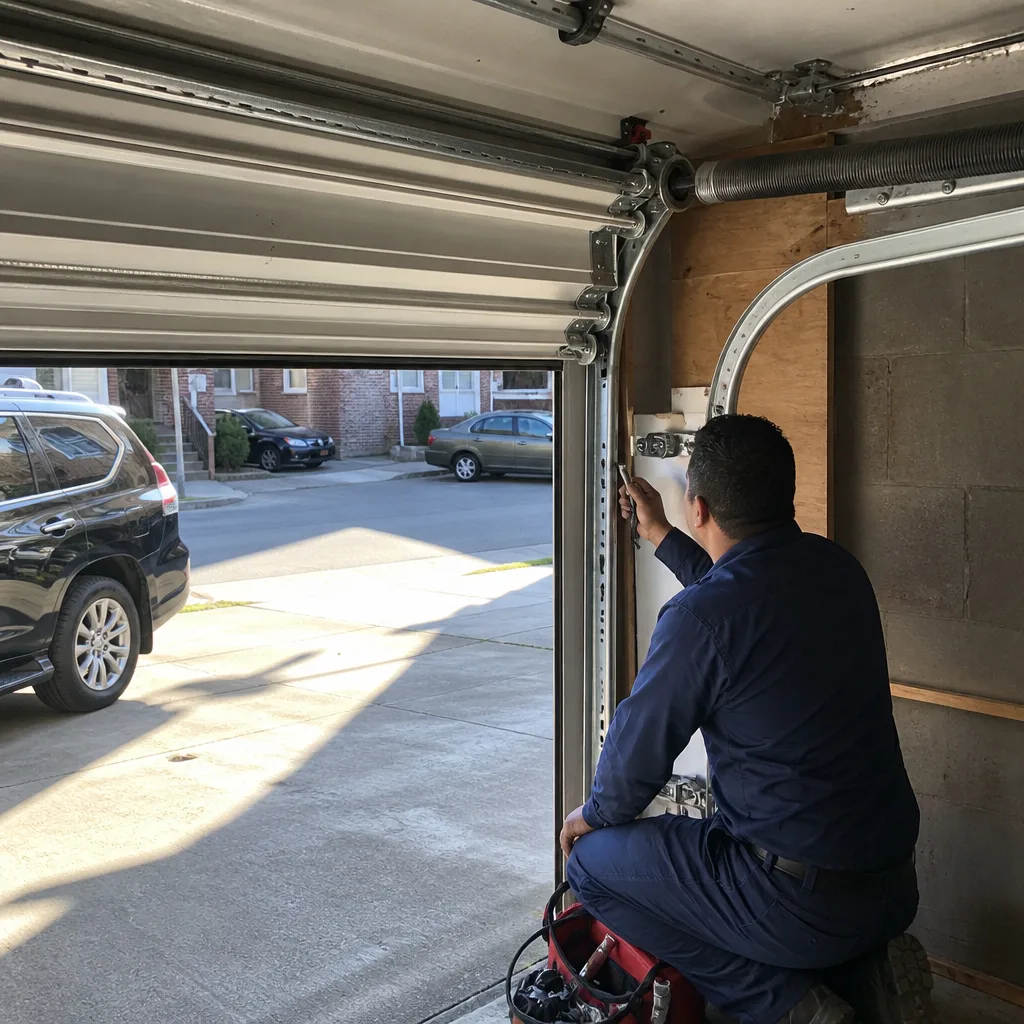 After
After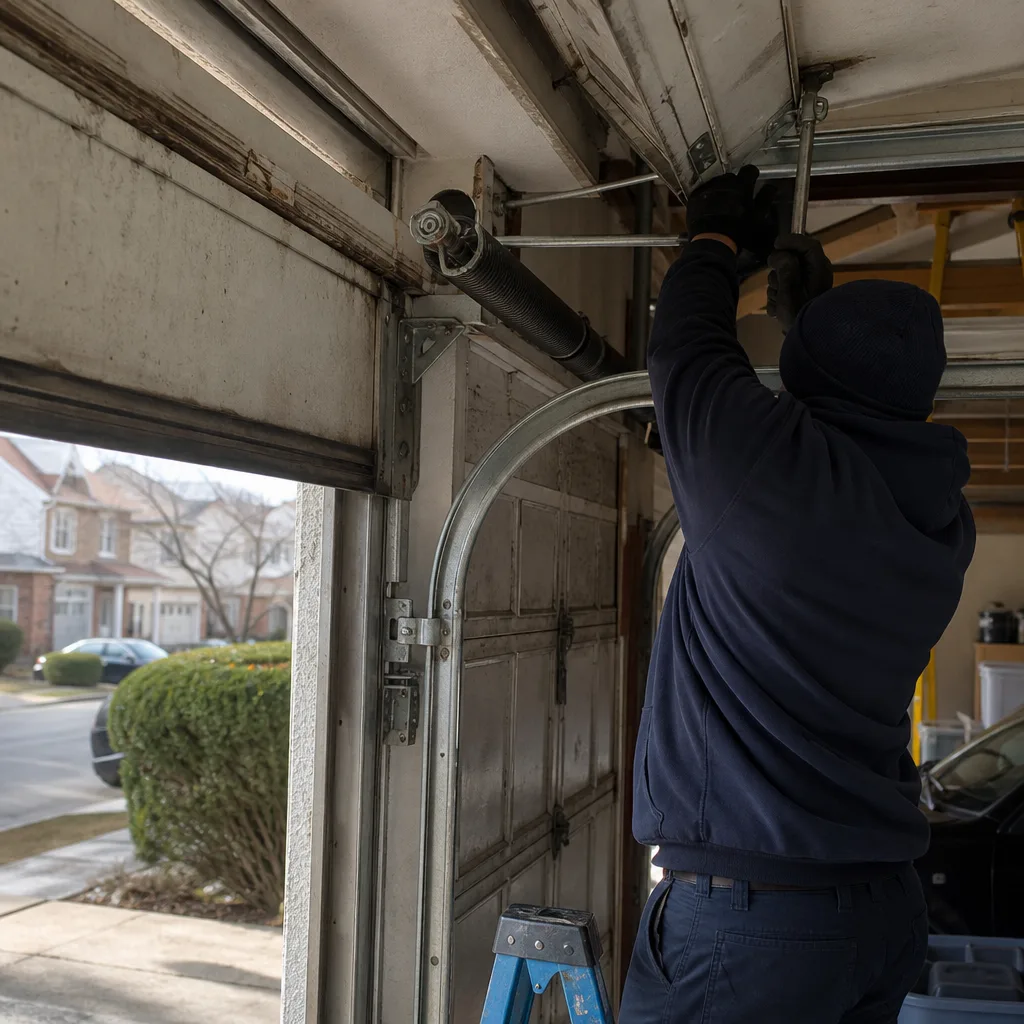 Before
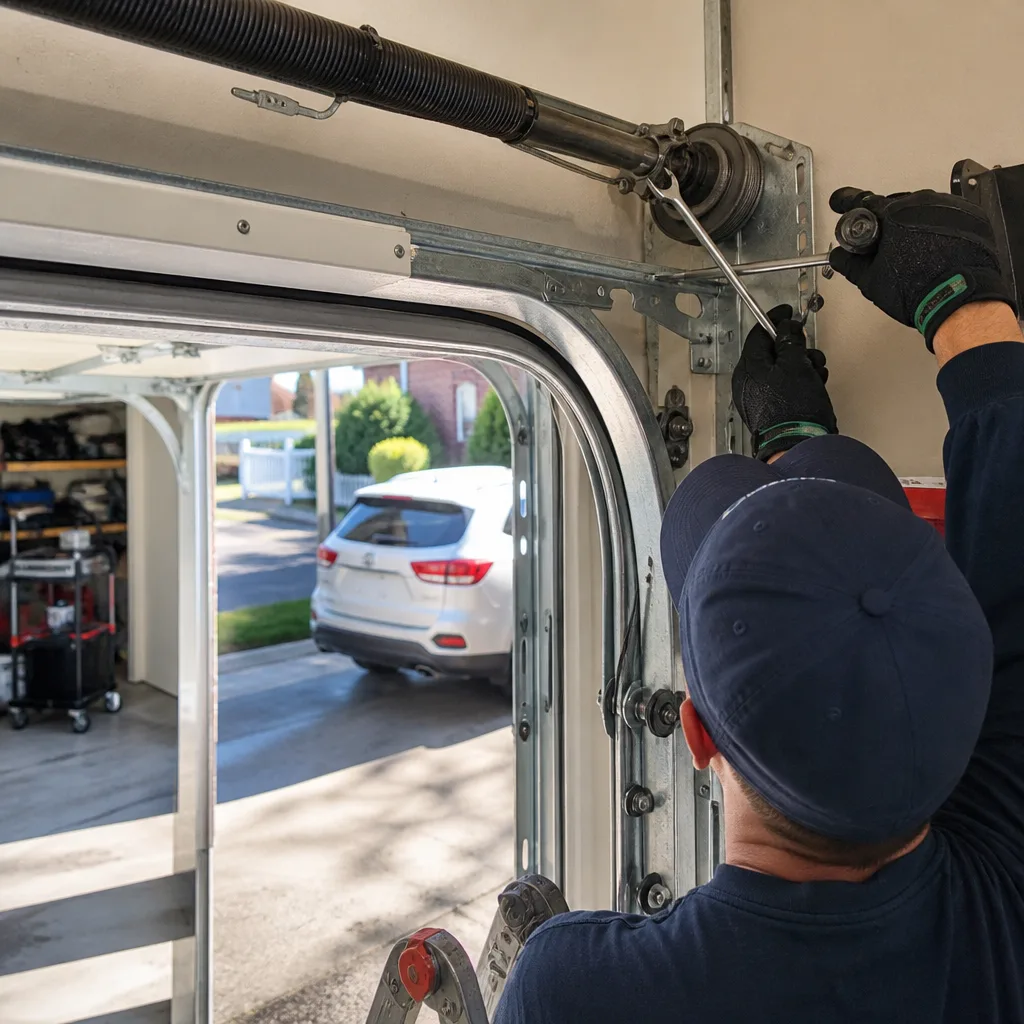 After
AfterWhen to Call a Professional
Call a professional the moment you see a visible gap in a torsion spring, hear a loud bang from the garage, or notice that the door slams during a manual lift test. These are structural failures involving stored mechanical energy, and they are not resolving themselves. Also call when a grinding noise has persisted for more than a few weeks, when the door reverses unpredictably, or when you simply want someone who knows what to look for to inspect the entire system. A trained technician can spot a spring nearing the end of its cycle life, a cable that is fraying, and a track that is drifting out of alignment, all before any of them fail. Doyle Garage Doors Queens offers free estimates in Queens, call (585) 440-5777, and every job includes a written price before any work begins. We also provide garage door installation in Queens if your door has reached the end of its service life.
Frequently Asked Questions
A torsion spring replacement in Queens typically costs $280 to $420 for a single spring, and $380 to $550 for a pair on a heavier two-car door. The exact price depends on the door weight, spring rating, and whether high-cycle springs are selected. Call (585) 440-5777 for a free estimate and a written quote before any work starts.
Yes, we repair garage doors same-day across Queens, including neighborhoods like Jamaica, Flushing, and Richmond Hill. A live person answers the phone 24/7, day, night, weekends, and holidays, and we’ll give you a clear arrival window along with the technician’s name and photo before they show up.
No. The price is written down and handed to you before a single bolt is turned. No verbal estimates, no invoice surprises. What we quote is what you pay. If we find something unexpected, we stop, show you, and get your approval before proceeding.
Our technicians carry the most common torsion spring sizes, lift cables, rollers, and opener parts on the truck for every Queens job. That means most repairs are completed on the first visit. For unusual door sizes or specialty springs, we can usually source the part the same day through our local supply network.
We service all major garage door and opener brands, including LiftMaster, Chamberlain, Genie, Clopay, Amarr, Wayne Dalton, Craftsman, and Raynor. Our technicians are factory-trained on this equipment, which means the repair is done to the manufacturer’s specifications, not a generic approximation. Queens homes with Wayne Dalton, Amarr, or Raynor doors are particularly common, and we know the quirks of each brand.
In the Queens climate, with its cold winters and salt exposure from road-treated cars, a standard 10,000-cycle torsion spring lasts roughly six to eight years under normal use. High-cycle springs rated for 20,000 cycles can last twelve to fifteen years. If your springs are seven years old or older, an inspection is the cheapest insurance you can buy.
The Bottom Line
Your garage door talks to you. The grinding noise, the reverse-before-close, the uneven gap, the hum-with-no-movement, every one of these is a specific message about a specific part. Learning to read those messages takes five minutes. Acting on them saves hundreds of dollars and prevents the worst outcomes: a door that drops, a family locked out, a garage that won’t secure. For more guides & resources on keeping your door reliable year-round, visit our blog. The men and women who service Queens garage doors see the same story repeat itself year after year. The homeowner who calls at the first sign of a problem pays a small repair bill. The one who waits pays more, sometimes much more. Aaron Teague founded Doyle Garage Doors Queens in 2001 as part of the Threshold Group family, and the commitment has always been the same: a written price before any work begins, a 365-Day Done Right Promise on every repair, and a background-checked technician whose name and photo you receive before they arrive. If you’ve noticed any of the warning signs in this guide, call (585) 440-5777. A real person answers, day or night.
Written by Aaron Teague, Owner at Doyle Garage Doors Queens, serving Queens since 2001.