
Last updated October 16, 2026
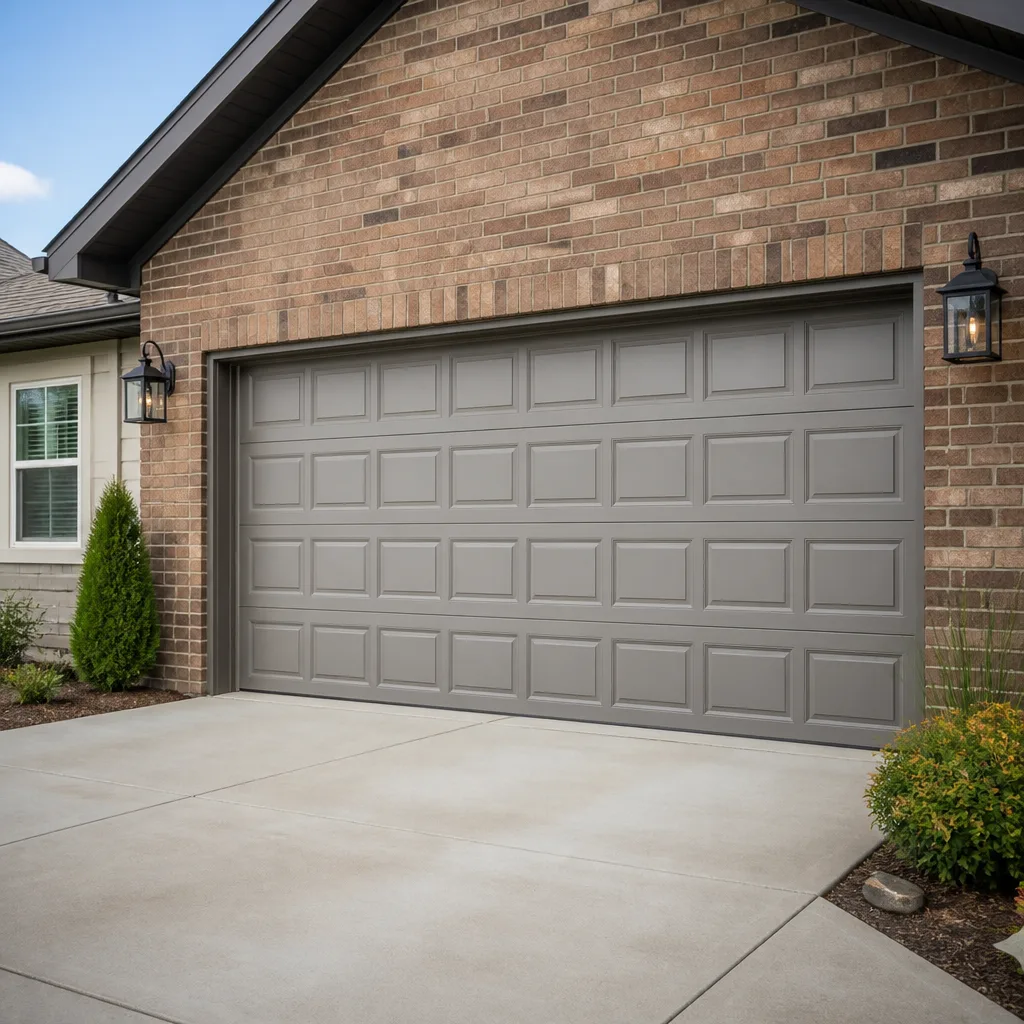 Raised-panel steel
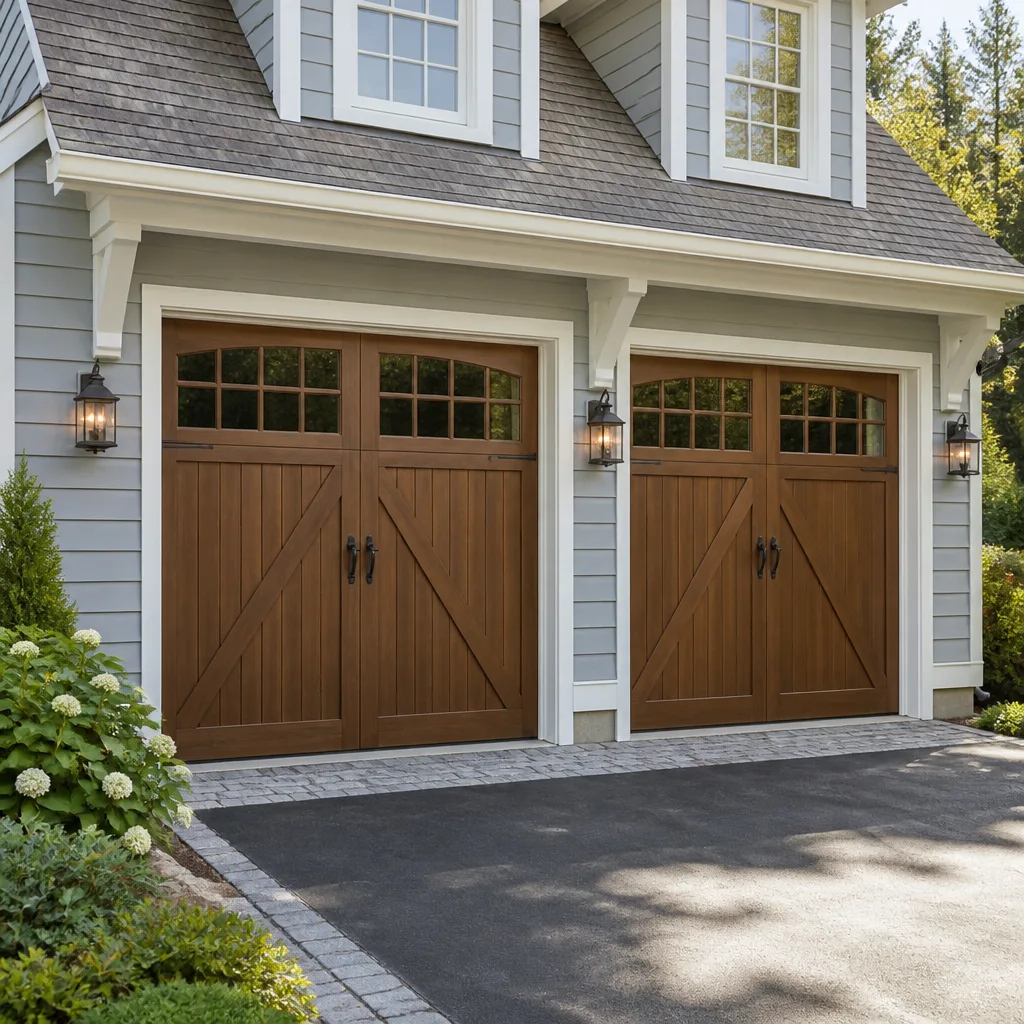 Carriage house
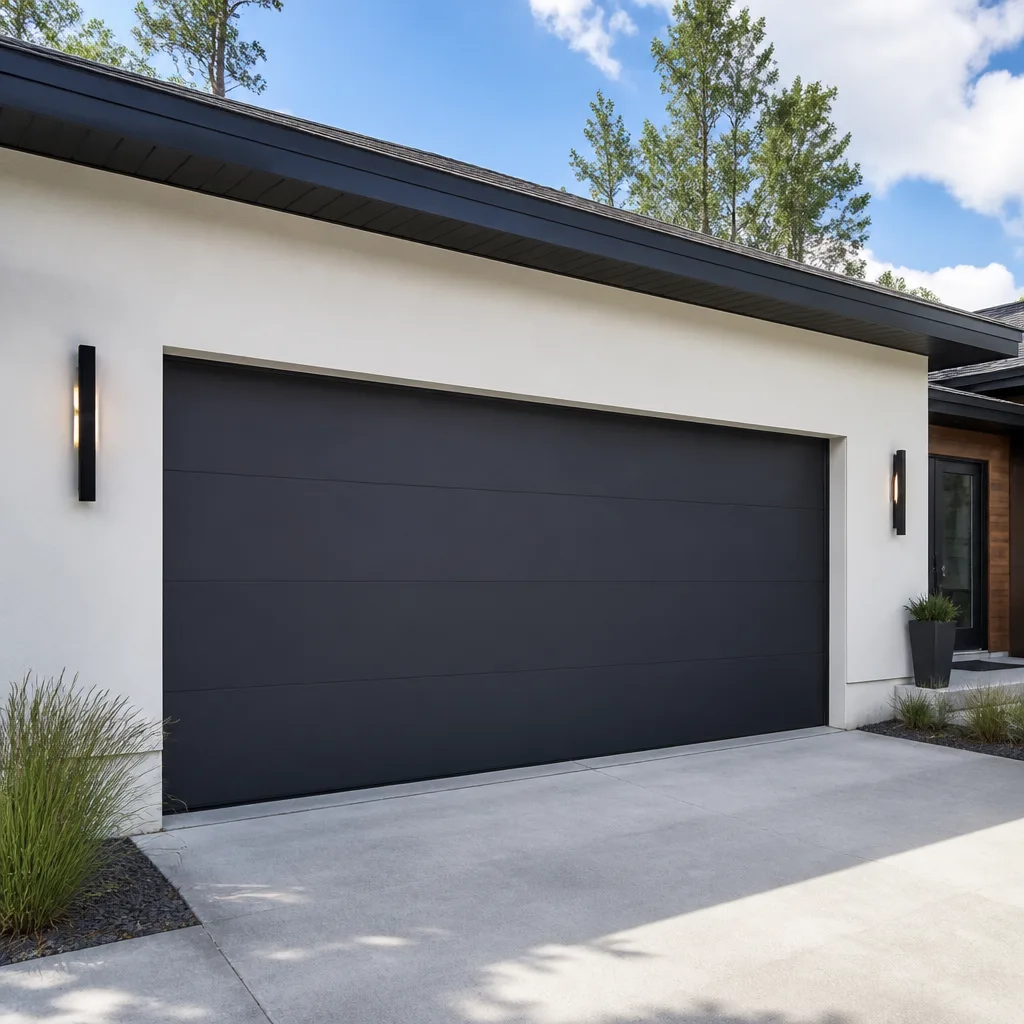 Modern flush
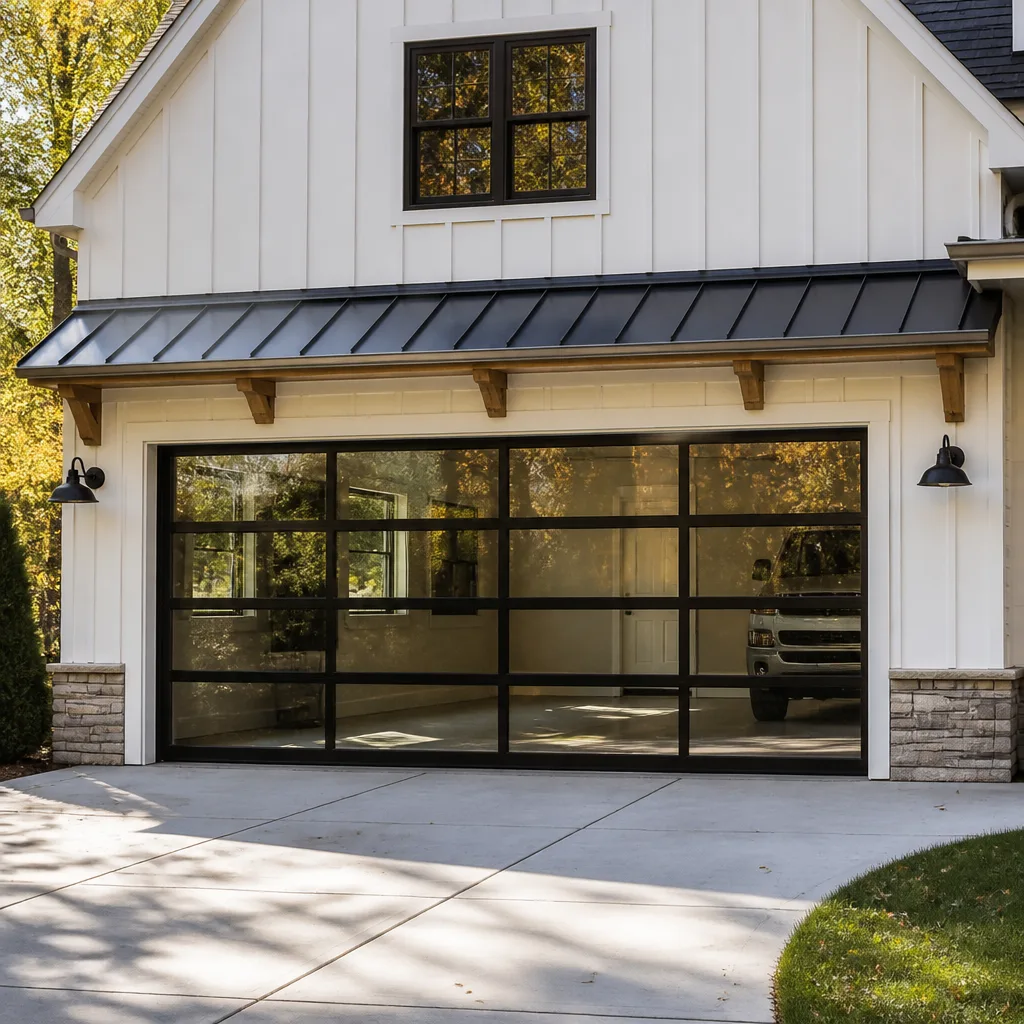 Full-view glass
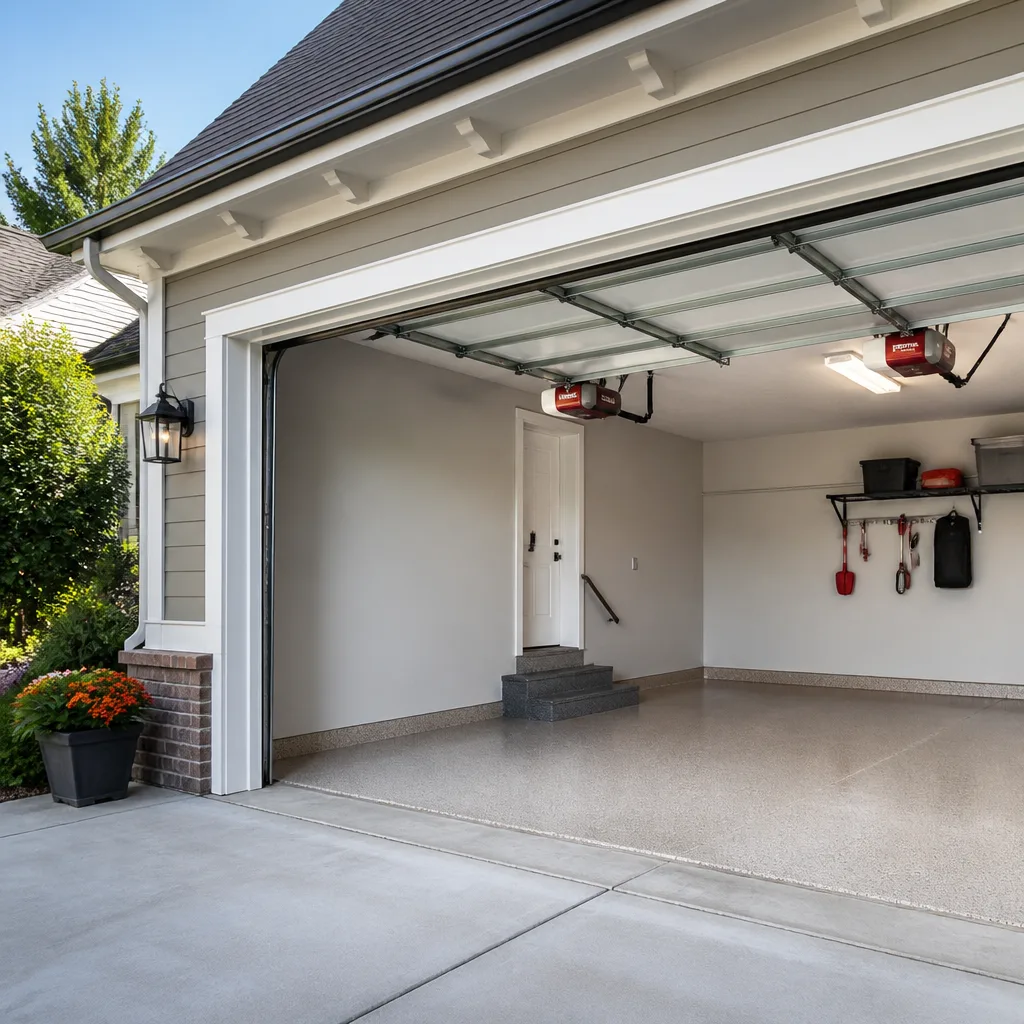 LiftMaster openers
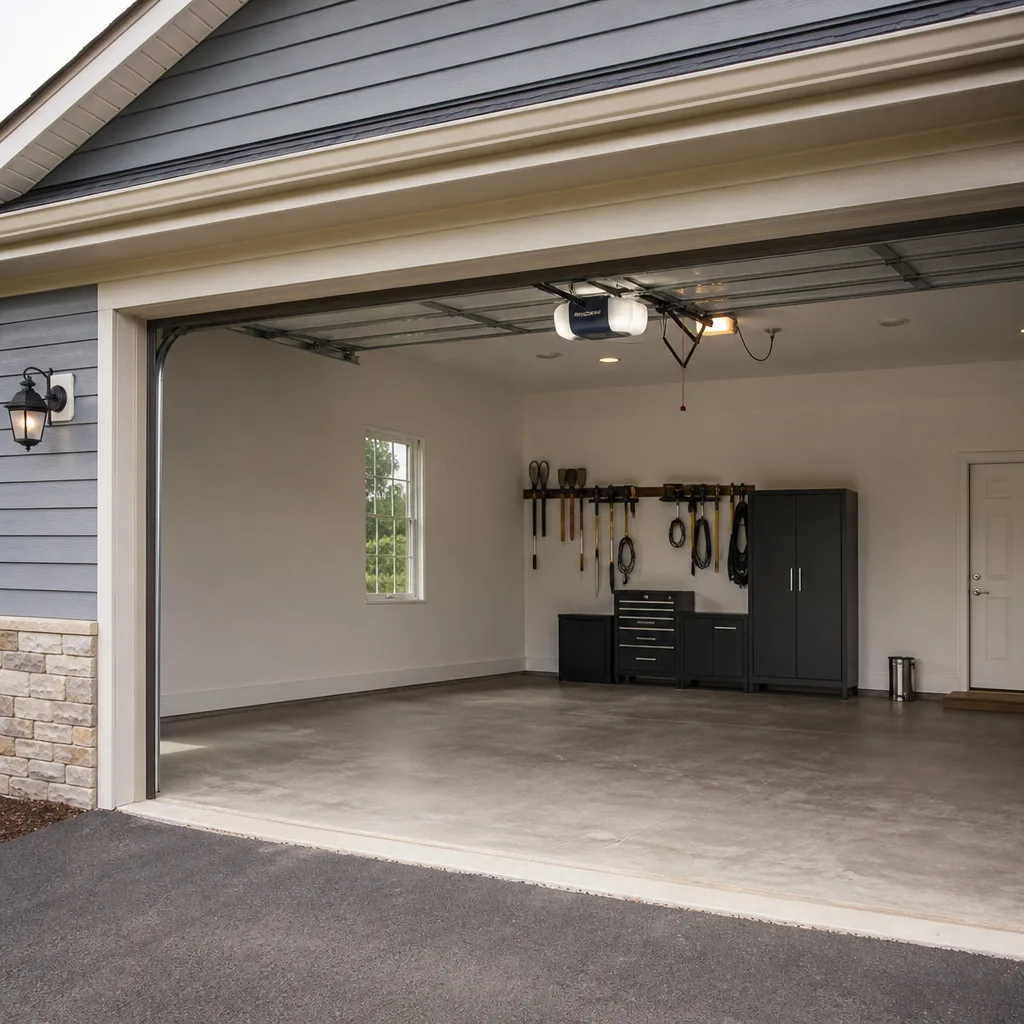 Chamberlain openers
Full 25-point door and opener safety check with every visit - springs, cables, rollers, tracks, and your LiftMaster or Chamberlain opener included
You get a price before we start. It does not change when the truck arrives.
Get your free estimateThe Complete Guide to Garage Door in Queens
A detached garage in Bayside faces almost none of the same pressures as a garage tucked under a two-family in Woodhaven, yet most garage door guides treat every installation the same way. We wrote this guide because we’ve worked on thousands of Queens garage doors since 2001 and we’ve seen the same pattern repeat itself: a door that would last 20 years in Nassau County fails in 8 years in Rockaway, not because of bad parts but because of salt air, tight clearances, and the wrong hardware for the wrong block. This guide covers materials, spring systems, opener selection, Queens building code, what repairs actually cost here, and how to tell when it’s time to stop repairing and start replacing. For more guides & resources, visit our blog.
Quick Answer
A garage door in Queens requires different material, spring, and opener choices depending on your neighborhood’s climate and your garage’s physical layout. The right setup for a low-headroom attached garage in Astoria differs from what a detached garage in Jamaica Estates needs. This guide explains each decision point in plain language, what repairs typically cost across Queens, and what the NYC Department of Buildings requires when you replace a door.
Styles & brands we work with
Table of Contents
- The Queens Garage: What Makes It Different
- Garage Door Materials: What Holds Up in Queens
- Torsion vs. Extension Springs: What Your Home Likely Has
- Choosing a Garage Door Opener for Queens Homes
- NYC Department of Buildings Requirements for Garage Door Replacement
- Garage Door Repair Costs in Queens: Real Numbers
- What a Garage Door Installation Actually Involves
- Queens-Specific Maintenance Routine
The Queens Garage: What Makes It Different
Queens has the highest concentration of attached garages in New York City. That changes everything. A detached garage has four walls open to ventilation. An attached garage shares a wall with your living space, which means humidity from the house moves into the garage, condensation forms on metal parts, and the temperature swings are less extreme but more sustained. We see this pattern across neighborhoods like Maspeth, Middle Village, and Ridgewood, where attached garages built in the 1940s and 1950s often have ceiling clearances under 7 feet.
The second factor is geography. Homes near Jamaica Bay and the Rockaway peninsula get salt air that accelerates corrosion on unpainted or powder-coated steel components. We regularly replace torsion spring cables in Howard Beach and Broad Channel that show rust pitting within three to four years. The same cable in fresh Meadows, further inland, lasts twice as long. The difference is airborne salt. If you live within a mile and a half of Jamaica Bay or the Atlantic, your hardware lives in a corrosive environment that inland guides never mention.
The third factor is driveway geometry. Queens driveways are among the narrowest in the five boroughs. Many homes in Forest Hills, Kew Gardens, and Rego Park have single-car driveways under 9 feet wide. That width dictates the opener rail length you can install, the clearance your trolley carriage needs, and whether a jackshaft opener mounted on the wall makes more sense than a traditional ceiling-mounted rail system. A generic guide won’t tell you this. But we’ve seen too many homeowners in Bayside Hills order a standard 8-foot rail opener only to discover their finished ceiling or a support beam makes installation impossible without reconfiguring the entire header.
Garage Door Materials: What Holds Up in Queens
Your garage door material choice in Queens should reflect two things: how close you live to salt air and whether your garage is attached to your home. For attached garages with living space above or beside them, insulation matters more than most people expect. A non-insulated steel door in a two-family in Elmhurst lets heat escape through the shared wall, and in summer the garage becomes an oven that warms the room above it.
Steel: The most common material in Queens. Galvanized steel doors from Clopay and Amarr hold up well inland but require regular washing and a corrosion-resistant hinge set near the waterfront. Look for doors with a baked-on polyester finish, not a painted finish. The painted version will blister within two to three years in Rockaway or Howard Beach.
Aluminum with glass: Modern, lightweight, and highly resistant to salt corrosion. Common in contemporary homes in Long Island City and Astoria. The trade-off is durability. Aluminum dents more easily than steel and the glass panels are expensive to replace individually. In neighborhoods with street-facing garages and narrow clearances, this material still makes sense because it weighs about 40% less than steel, which reduces strain on your springs and opener.
Wood: Rare for new installations. But if you own a pre-war home in Forest Hills Gardens or Douglaston with an original wood garage door, you know the maintenance reality: annual sealing, recaulking, and repainting. Wood moves with humidity, and Queens summers are humid. Wood doors also require custom-built frames when they warp beyond repair, which costs more than a standard replacement steel door.
What About Vinyl and Composite?
Vinyl doors exist but we rarely install them in Queens. They resist salt well, which makes them attractive for the Rockaways, but they fade under direct sun exposure and get brittle in cold weather. Composite doors, made from wood fibers and resin, offer the look of wood without the warping. They cost more upfront than steel but perform well in the humidity of Flushing, Jamaica Estates, and Bellerose. If you’re set on a wood appearance and your garage faces south, composite is the better long-term choice in Queens.
Torsion vs. Extension Springs: What Your Home Likely Has
Garage doors on Queens homes from the 1950s and earlier were often originally built with extension springs, the two long coils that run along the horizontal tracks on either side of the door. Many of those systems are still in place in older attached homes in Woodhaven, Ozone Park, and Richmond Hill. Newer installations and almost every professional replacement use torsion springs, the large coil or pair of coils mounted on a metal shaft directly above the door opening.
In our experience around Queens, torsion springs last 10,000 to 20,000 cycles, which for most homes works out to 7 to 12 years. Extension springs last about the same number of cycles but fail more dangerously because they snap outward when they break, and if a safety cable isn’t installed, the broken spring can whip into anything in its path, including a car or a person. Modern code requires safety cables on all extension spring systems, but older Queens homes frequently lack them.
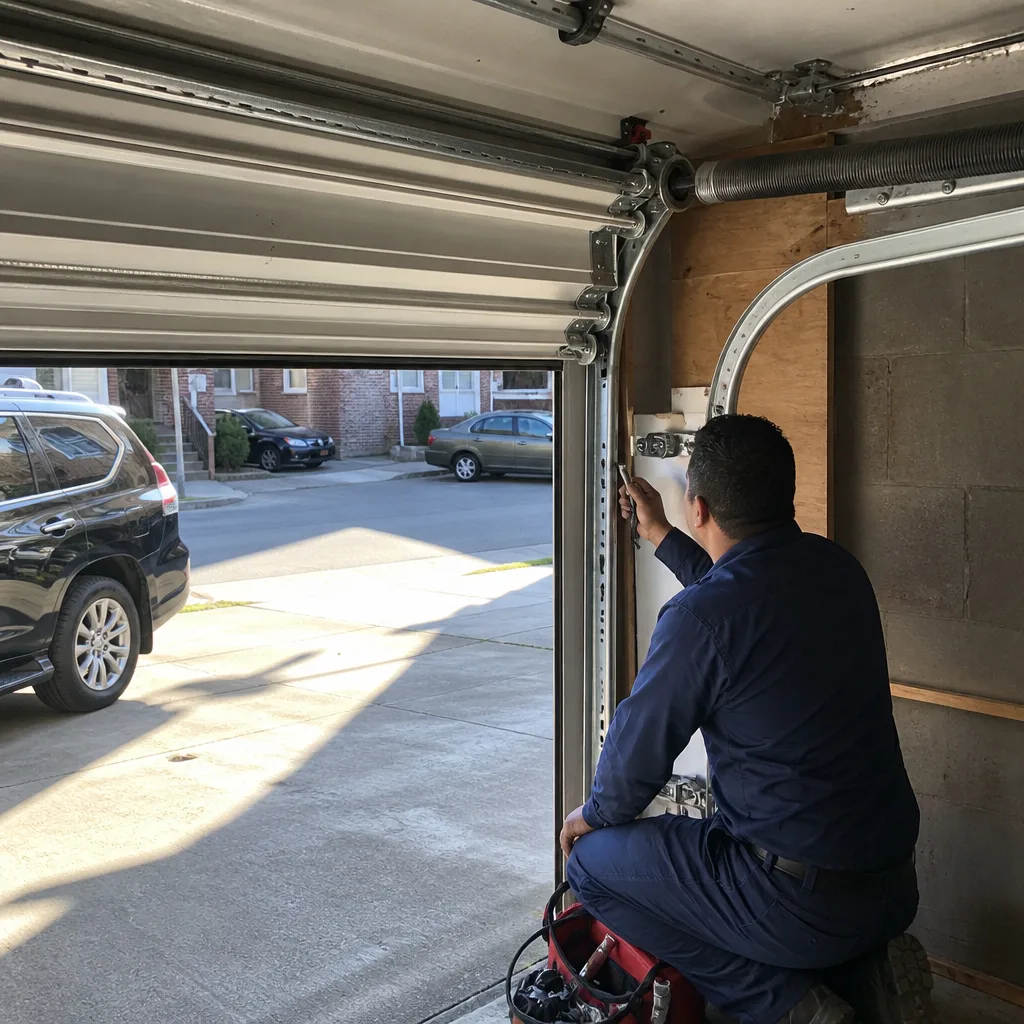
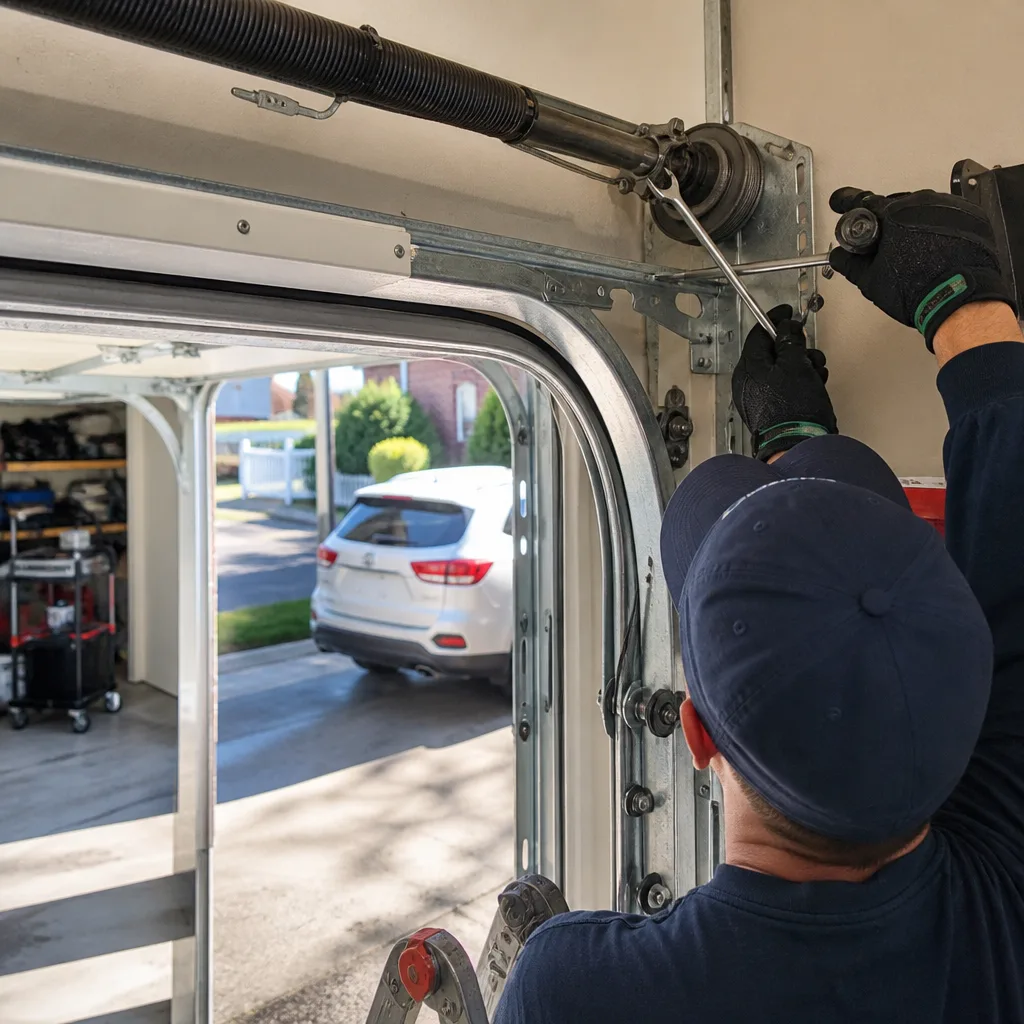
One warning we give every Queens homeowner: do not attempt to replace or adjust a torsion spring yourself. These springs hold enough tension to seriously injure or kill someone who doesn’t know exactly how to release the pressure. We use winding bars and a specific sequence to tension the spring safely. A trained professional should always handle spring work. We’ve been called to homes in Bayside and Woodside where a homeowner tried to save $150 and ended up with a damaged door panel, a broken cable drum, or a trip to urgent care. Call us and let a professional do it.
Low-Headroom Conversions: A Queens Specialty
Attached garages in pre-war Queens homes often have ceiling clearances between 6’8″ and 7’4″, which standard torsion spring configurations can’t accommodate. For these spaces, a low-headroom conversion uses double-track systems and rear-mount hardware to allow the door to open fully while staying close to the ceiling. Low-headroom conversions cost roughly $150 to $350 more than standard spring replacements because the hardware kit is specialized and the labor is more time-consuming. We install these regularly in Sunnyside, Jackson Heights, and Flushing, where the attached garage under a two-family or attached rowhouse is the dominant building type.
Choosing a Garage Door Opener for Queens Homes
The three types of garage door openers you’ll hear about are chain drive, belt drive, and jackshaft. Each one suits a different Queens home configuration.
Chain drive: The most affordable and the noisiest. The chain rattles along a metal rail as it moves the trolley carriage, the sliding mechanism that pulls the door along the track. In a detached garage, the noise doesn’t matter. In a home in Kew Gardens Hills where the master bedroom sits above the garage, a chain drive opener will wake someone up at 6 a.m. We don’t recommend chain drive for any attached garage in Queens, period.
Belt drive: Uses a reinforced rubber belt instead of a chain, which reduces noise significantly. This is our default recommendation for attached garages throughout Queens. Belt drive units from LiftMaster and Chamberlain cost $80 to $150 more than comparable chain drive models, but the noise reduction is dramatic enough that homeowners in attached housing almost never regret the upgrade.
Jackshaft: Mounts on the wall beside the door, not the ceiling. It turns the torsion shaft directly, which eliminates the ceiling-mounted rail entirely. If your Queens garage has a finished ceiling, a low ceiling, or you want to free up overhead space for storage, a jackshaft opener from LiftMaster is the right call. The catch: jackshaft openers require a torsion spring system and adequate side clearance. Many attached garages in Queens don’t have the side room, and some older doors won’t work with one. Expect to pay $200 to $400 more than a comparable belt drive.
Opener Rail Length and Narrow Queens Driveways
This detail gets ignored by generic guides and it matters more in Queens than almost anywhere else. Opener rails come in standard lengths matched to door height: 7 feet for a 7-foot door, 8 feet for an 8-foot door. But the rail extends about 3 feet beyond the door opening into the garage. In a shallow garage with a narrow single-car door, the rail can interfere with a car parked inside, a ceiling-mounted storage rack, or a support beam. Measure your garage’s depth before choosing an opener, not just the door height. If your garage in Woodside or Astoria is under 18 feet deep, you may need a shorter rail configuration or a jackshaft opener to avoid the rail hitting the back wall.
NYC Department of Buildings Requirements for Garage Door Replacement
Replacing an existing garage door on a one- or two-family home in Queens does not typically require a DOB permit, as long as you’re not changing the structural opening. For full details, see our guide to Garage Door Permits, Codes & Inspections in NY: What You Need to Know. That’s the practical answer. You can replace the door, the tracks, the springs, and the opener without filing with the Department of Buildings. The work must meet the New York City Building Code’s wind load requirements for exterior doors and the New York State Residential Code for garage door safety features.
What changes the picture: if you’re making the opening larger, adding a new garage door where there wasn’t one, or the property is a commercial building or a multi-unit dwelling with three or more units, and you’ll likely need an alteration permit. Co-ops and condos add another layer: many buildings in Queens, including newer developments in Long Island City and older co-ops in Rego Park, require board approval before any exterior-facing door work, even if the city doesn’t. Check with your building’s management before scheduling installation.
One requirement that applies to every Queens home, permit or not: the door must have an automatic reverse mechanism that meets the Code of Federal Regulations UL 325 standard. This includes photoelectric sensors mounted six inches or less from the floor on both sides of the opening, and a reversal mechanism that stops and reverses the door when it hits an obstruction. If your opener predates these requirements, you have a safety violation. We replace outdated openers throughout Queens regularly for this exact reason.
Garage Door Repair Costs in Queens: Real Numbers
These are the prices we quote for work throughout Queens. They reflect the borough’s market conditions as of 2025 and will vary somewhat by neighborhood and door type, but this gives you a realistic baseline before a technician arrives. For a deeper breakdown, see our Garage Door Cost Breakdown: The Queens Homeowner’s Reference for 2026.
| Repair | Typical Cost in Queens | Time on Site |
|---|---|---|
| Single torsion spring replacement | $180 – $280 | 45 – 60 minutes |
| Double torsion spring replacement | $280 – $420 | 60 – 90 minutes |
| Extension spring pair with safety cables | $160 – $260 | 45 – 60 minutes |
| Broken cable replacement (one side) | $140 – $220 | 30 – 45 minutes |
| Roller replacement (all) | $120 – $180 | 20 – 30 minutes |
| Photo eye sensor alignment/replacement | $90 – $150 | 20 – 30 minutes |
| Garage door opener replacement (belt drive, installed) | $450 – $700 | 90 – 120 minutes |
| Full door replacement (basic steel, installed) | $1,400 – $2,800 | half day |
| Low-headroom torsion conversion | $320 – $560 | 90 – 120 minutes |
These ranges reflect typical Queens single-family and two-family homes. Commercial doors on warehouses in Maspeth or mixed-use buildings in Jackson Heights run higher because the doors are larger and the hardware is heavier. Before any work starts, we write the exact price on paper and hand it to you. That price doesn’t change after we open the door and see what’s inside. If we find something unexpected, we stop, explain what happened, and give you a new written price before continuing.
For broken spring repair, same-day service in Queens is standard when you call before 2 p.m. We stock torsion springs for the most common Queens door weights and we replace springs in about an hour on most doors. Call (585) 440-5777 for a free estimate.
What a Garage Door Installation Actually Involves
A full garage door installation for a Queens home typically follows these steps, and yes, we can usually complete it in one day for a standard single or double door.
- Measure and verify: We measure the opening width, height, headroom, side room, and backroom. On attached Queens homes, headroom is often the limiting factor. Nothing gets ordered until the measurements are confirmed.
- Door selection: You choose the material, insulation rating, window style, and finish. We quote the exact door price, including hardware and labor, in writing before anything is ordered.
- Removal of the old door: Spring tension is released safely (if it hasn’t already failed), the door sections are removed from the tracks, and the tracks and hardware are unbolted.
- Track and spring installation: New vertical and horizontal tracks go up first, followed by the torsion spring assembly or extension spring system depending on your home’s configuration.
- Door panel installation: The bottom section goes in first, then each subsequent section is stacked, hinged, and secured. The rollers go into the track as each section is added.
- Opener installation: If you’re replacing the opener, it’s installed after the door is in place. This includes rail mounting, safety sensor placement, and force adjustment.
- Testing and adjustment: The door is balanced, the limits are set, the auto-reverse feature is tested, and the door is cycled a minimum of five times. We don’t leave until it operates smoothly and safely.
The written guarantee on any repair is simple: 365 days from the date of repair. If it fails, we come back and make it right at no charge. That guarantee is included on every job we do in Queens, automatically. You don’t ask for it and you don’t pay extra for it.
Queens-Specific Maintenance Routine
Maintenance for a Queens garage door depends heavily on where you live in the borough. Here’s the routine we recommend to our customers, organized by environmental exposure.
Waterfront homes (Rockaway, Broad Channel, Howard Beach, Breezy Point): Wash the exterior door face monthly during summer with a mild detergent and rinse thoroughly. Inspect torsion spring cables and bottom brackets every 90 days for rust pitting. Apply a corrosion inhibitor to unpainted hardware twice per year. We replace more bottom brackets in these neighborhoods than anywhere else in Queens because salt air attacks the metal where the cable attaches.
Interior borough (Flushing, Corona, Jamaica, Woodhaven): Humidity is your primary enemy. Keep the garage ventilated or install a small dehumidifier during July and August. Lubricate hinges, rollers, and springs every six months with a lithium-based garage door lubricant. Never use WD-40, which works as a solvent and strips the existing lubricant instead of adding to it.
Attached garages everywhere in Queens: Check the weather seal along the bottom of the door twice a year. In attached garages, this seal is the only thing keeping cold air, exhaust fumes, and rainwater from entering your home’s shared wall or ceiling. A torn seal in a Woodside rowhouse lets January air pour straight into the floor above. Replace the seal when it’s brittle or cracked, which typically costs between $60 and $120 with installation.
If your door gets used more than four times per day, as it does in many Queens two-family homes, do the lubrication routine quarterly instead of semi-annually. The extra usage accelerates wear on hinges and rollers in a way most single-family guides don’t account for.
Common Mistakes to Avoid
- Silver-spraying a rusted torsion spring. Spraying paint over a corroded spring doesn’t restore its strength, it just hides the damage until the spring snaps. If you see rust on your Springs, especially near Jamaica Bay, have them inspected before they fail.
- Buying a door based on the online price without checking Queens installation costs. A door that costs $800 online still needs $500 – $800 of labor, hardware, and disposal fees here. Get a complete installed price before comparing options.
- Ignoring photoelectric sensors on a pre-1993 opener. Older openers in eastern Queens homes lack the required auto-reverse safety feature. If a child or pet is under the door, the door won’t stop. This is a safety issue, not a convenience issue, and it’s worth replacing the opener.
- Assuming a low-headroom garage can’t take a standard torsion conversion. Most can, with the right rear-mount hardware. We regularly convert low-headroom setups in Astoria and Jackson Heights and add 6 to 10 inches of usable ceiling clearance.
- Using a big-box store installer for an attached Queens garage. These installers often aren’t familiar with pre-war framing, low-headroom conversions, or the corrosion patterns in waterfront neighborhoods. You’ll spend more fixing a bad installation than you saved on the original price.
- Forgetting to check your co-op or condo board’s exterior alteration rules. In Long Island City, Forest Hills, and Rego Park, many buildings require written approval before any garage door replacement. Skipping this step can result in fines or forced reversal of the work.
See the difference
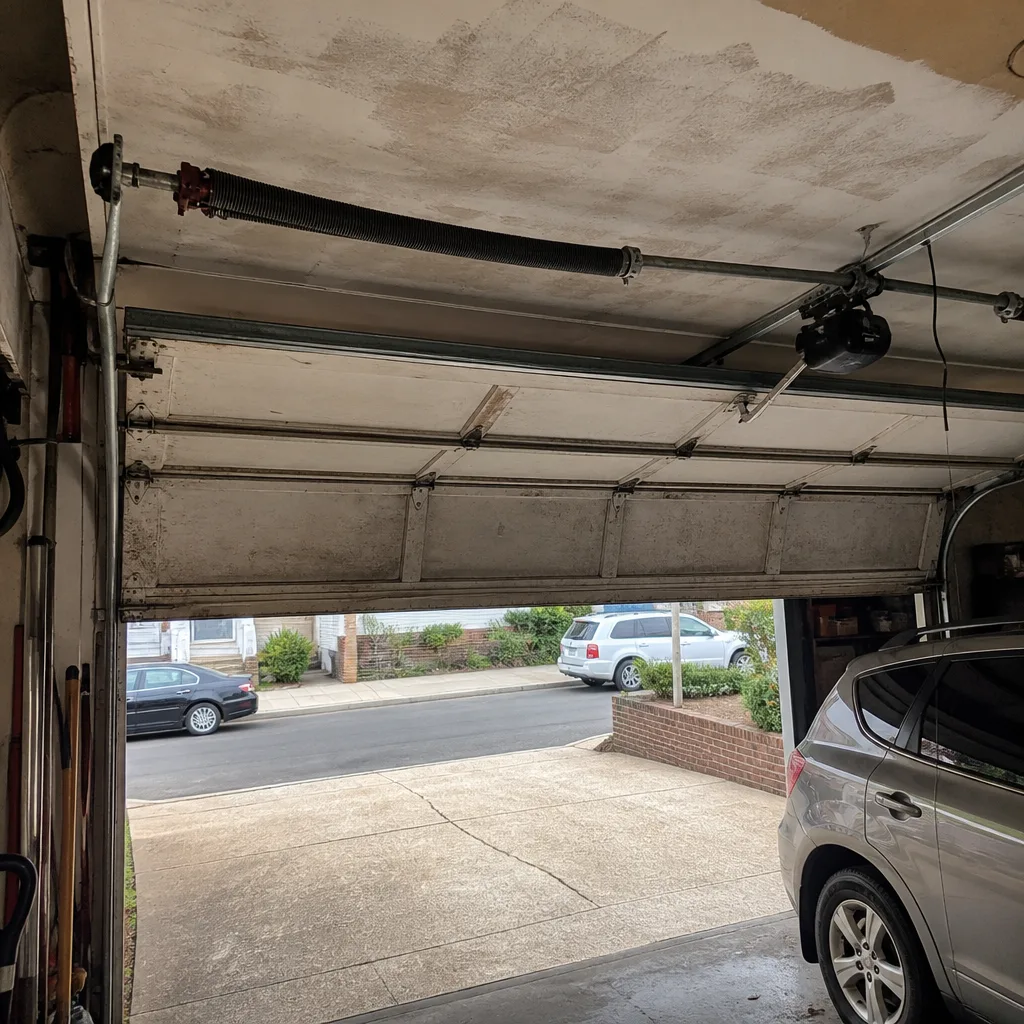 Before
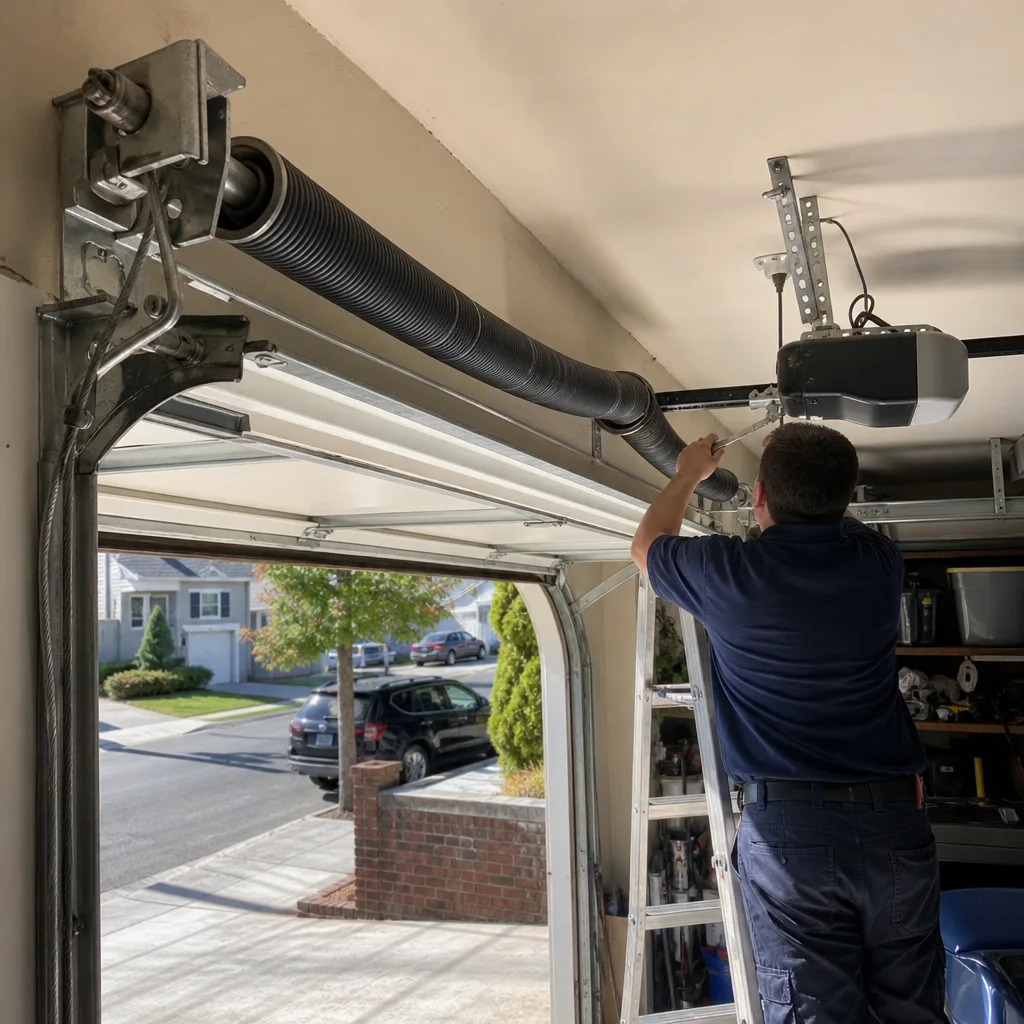 After
After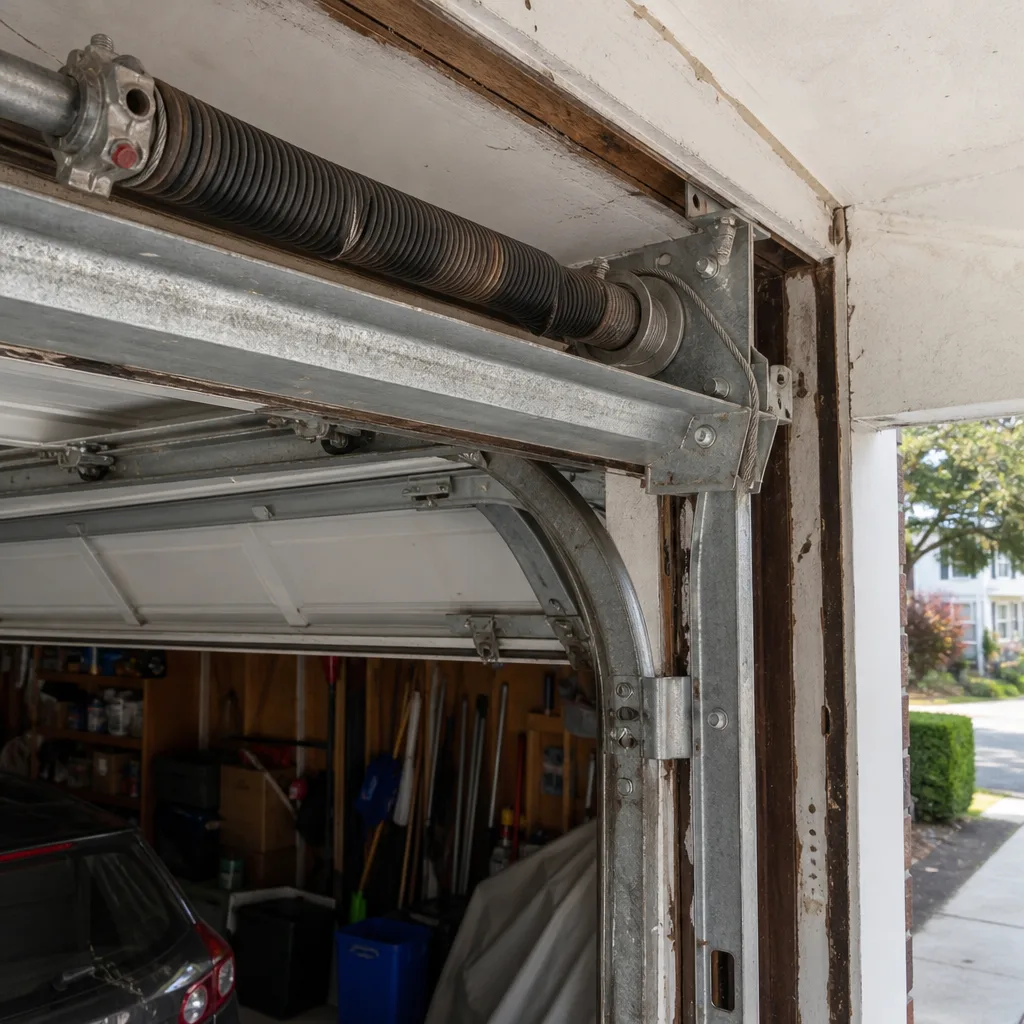 Before
 After
After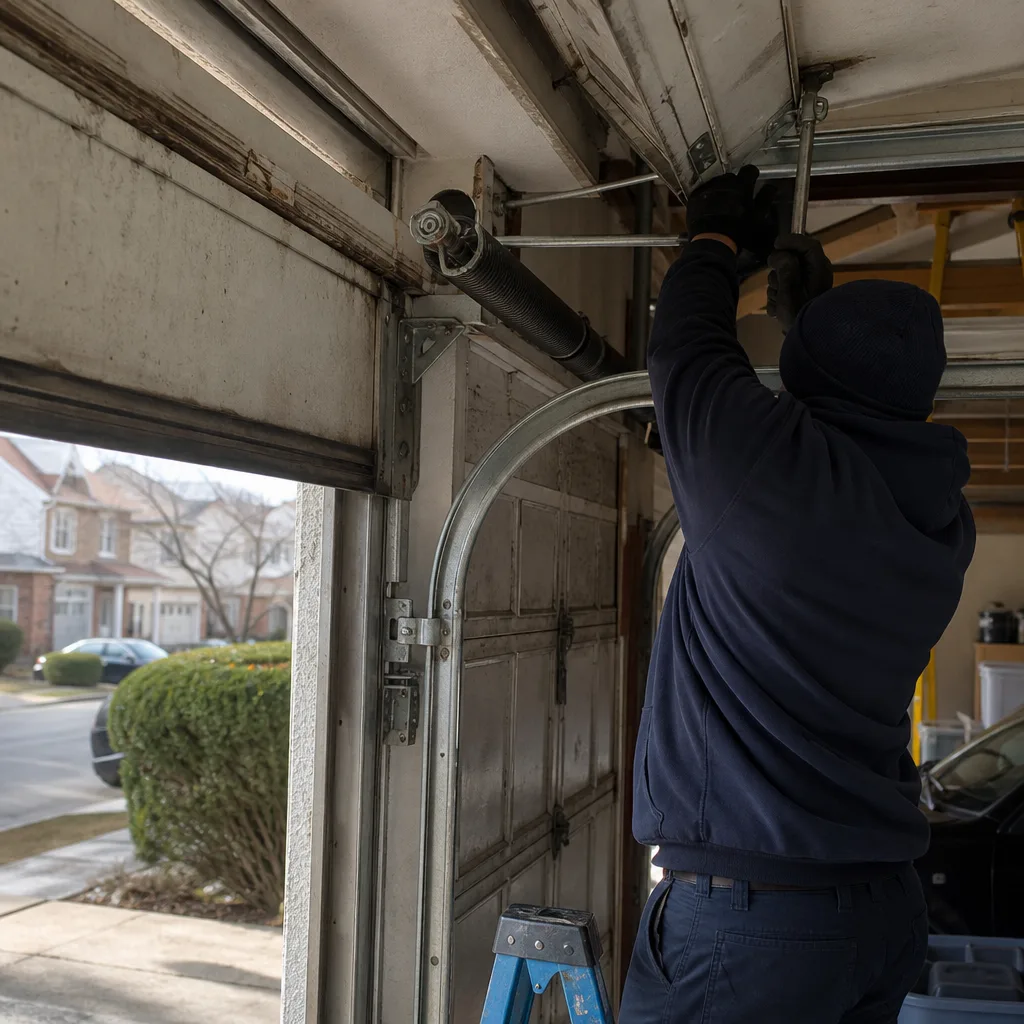 Before
 After
AfterWhen to Call a Professional
Any garage door problem involving springs, cables, or track realignment calls for a trained technician. These components are under constant tension and the failure mode is unpredictable. Specific scenarios where you should stop and call: you hear a loud bang and the door won’t open (a spring has broken), the door opens unevenly or grinds when it moves, the cables look frayed or the door hangs at an angle, or the opener runs but the door doesn’t budge. Doyle Garage Doors Queens offers free estimates throughout Queens and we answer live 24 hours a day, 7 days a week, including holidays. Call (585) 440-5777 and we’ll schedule a technician to meet you at your home, with the name and photo of the technician sent to you before arrival.
Frequently Asked Questions
Single torsion spring replacement in Queens typically costs $180 to $280, and a double spring system runs $280 to $420. The exact price depends on the spring’s wire size, inside diameter, and length, which vary by door weight. Call (585) 440-5777 for a free quote and we’ll give you a written price before any work starts.
Yes, in most cases. We carry belt drive and chain drive openers from LiftMaster, Chamberlain, and Genie on the truck, and a standard opener replacement takes 90 minutes to two hours. In attached Queens homes where noise matters, belt drive is the better choice even though it costs slightly more. Call us to schedule same-day opener replacement in Queens.
For one- and two-family homes, no permit is required to replace an existing garage door as long as the structural opening stays the same size. Commercial properties, buildings with three or more units, and any installation that enlarges or changes the opening do require filing with the DOB. If you’re in a co-op or condo, check your building’s policy first.
Salt air from Jamaica Bay and the Atlantic accelerates corrosion on unpainted steel components like torsion spring cables, bottom brackets, and hinges. The same hardware that lasts 12 years in Flushing or Corona may show pitting within 4 years in Howard Beach or Rockaway. Wash the door monthly and have the hardware inspected twice per year if you live within a mile and a half of the water.
A correctly installed, well-maintained steel garage door lasts 15 to 20 years in most Queens neighborhoods. A torsion spring lasts 7 to 12 years depending on usage. The opener typically lasts 10 to 15 years. Waterfront locations and two-family homes with heavy daily usage shorten all of those timelines by 30% to 40%.
A one-piece tilt-up door is a single solid panel that tilts outward and up as it opens. Older Queens homes from the 1950s and 1960s sometimes still have them in neighborhoods like Bellerose and Hollis. Sectional doors are built from four or five horizontal panels that bend as they travel along curved tracks. Sectional doors fit tighter to the ceiling, seal better, and work with all modern spring and opener systems. If you have a tilt-up door, replacing it with a sectional system is usually the right move.
The Bottom Line
Queens garage doors fail differently because Queens is not a uniform suburban environment. Salt air accelerates corrosion in some neighborhoods, humidity attacks hardware in others, and attached pre-war garages create clearance and noise issues that detached suburban garages never face. Match your door material to your proximity to water, your spring system to your home’s headroom, and your opener to your garage’s depth and proximity to living space. Replace springs professionally every 7 to 12 years, lubricate quarterly on high-use doors, and get a written price before any repair. That’s the complete formula for a garage door that works reliably year after year in any Queens neighborhood.
Ready to get started? Call Doyle Garage Doors Queens at (585) 440-5777 for a free estimate. We’ll send a technician to your home with the name and photo provided in advance, put every price in writing before work begins, and back every repair with our 365-Day Done Right Promise. Visit our Doyle Garage Doors Queens home page to learn more, or explore our specific guides on Garage Door Repair in Queens, Garage Door Installation in Queens, and Garage Door Opener Repair in Queens.
Written by Aaron Teague, Owner at Doyle Garage Doors Queens, serving Queens since 2001.